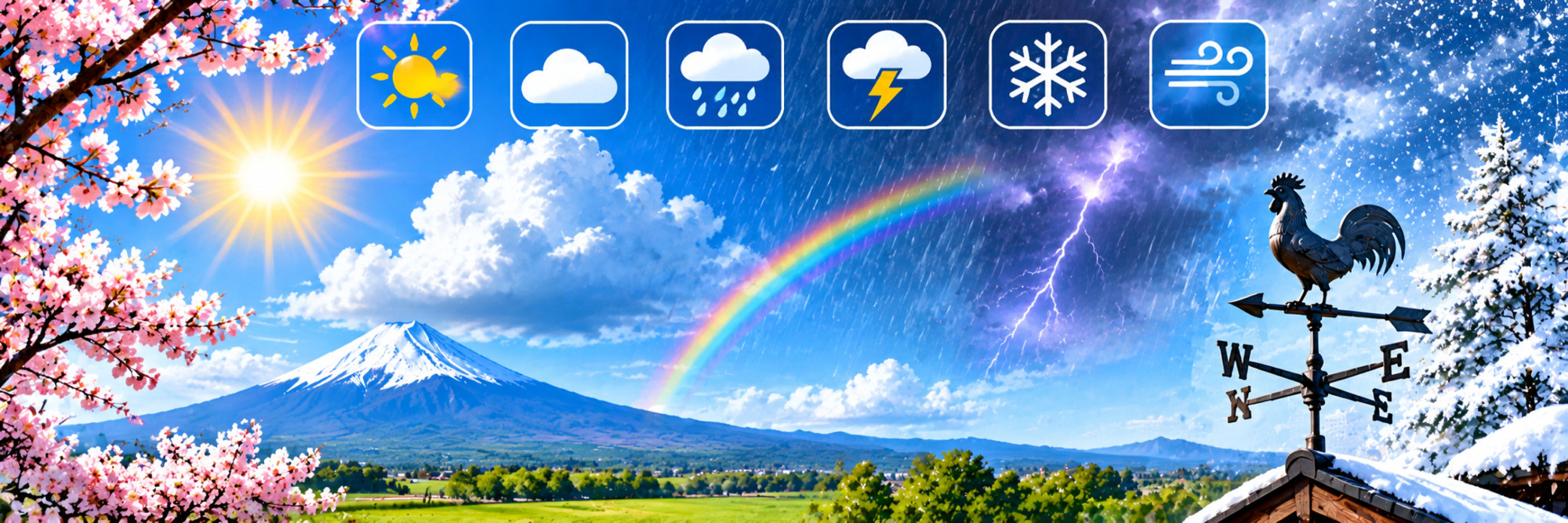
Lesson Goals
- be able to talk about the weather
- understand a basic weather forecast
Let's Start
The weather is the one thing we all talk about. When we want to plan something, we check the weather forecast and hope the weather will be good on the day of our event. We even talk about the weather when there is nothing else to talk about! Imagine being with somebody you just met, and discover you have very little in common. What do you talk about then? The weather!
OK, so here are some words and images that will help you remember the basic weather words.
 |
It will be rainy today. |
 |
On Tuesday it will be sunny and warm. |
 |
I love a warm spring day in the park. |
 |
I love to play outside on a snowy day. |
 |
Foggy mornings are common in the mountains. |
 |
It is cloudy today with a chance of rain. |
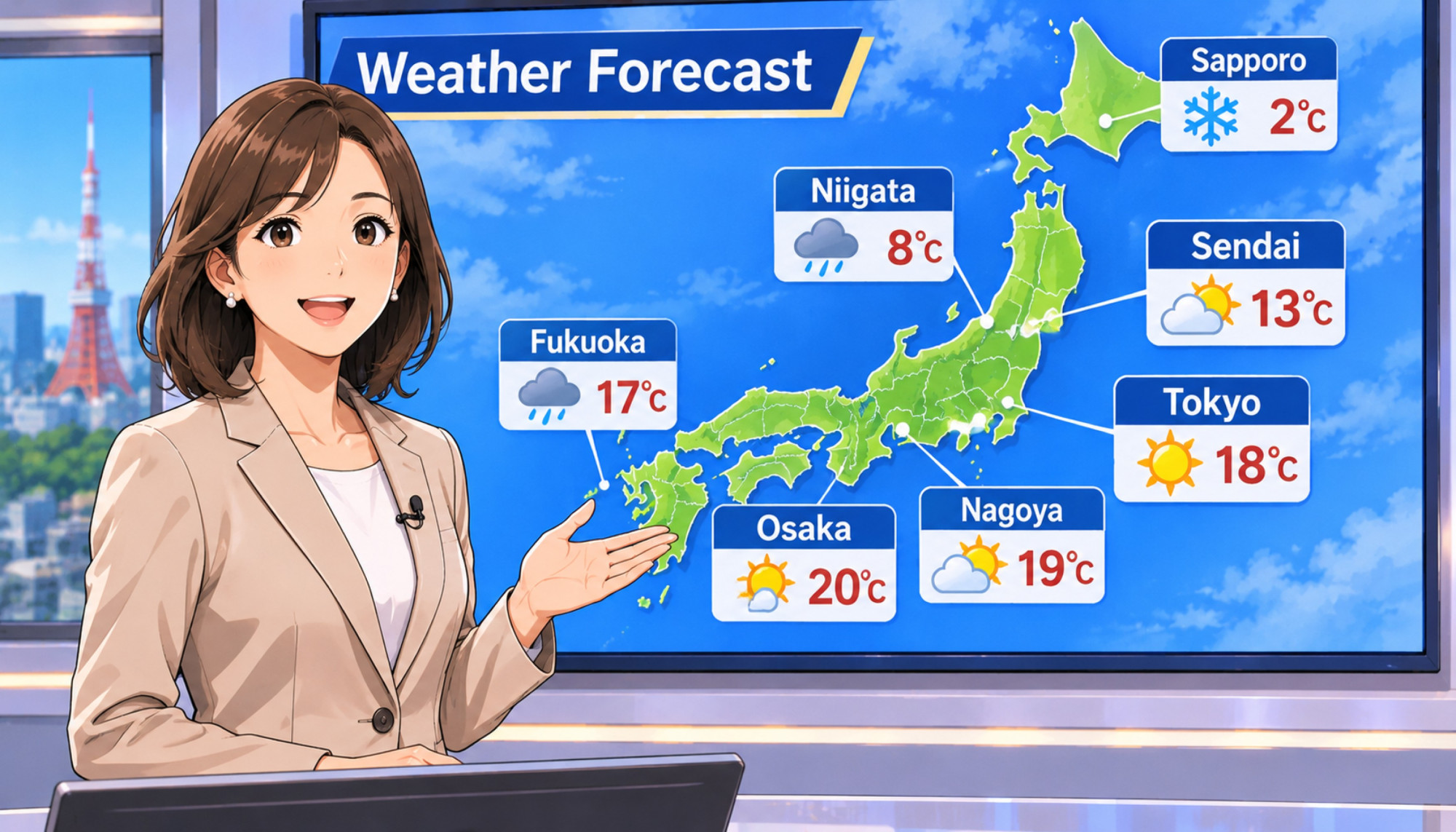 |
Did you see the weather forecast on TV? |
 |
On very stormy days I stay home. |
 |
I like flying a kite on a windy day. |
 |
Wow, it is really hot today! |
 |
Humid days make me feel so tired. |
 |
It will be cool today. |
 |
Tomorrow it will be very cold. |
Conversation
Jane and Keiko walk in the park on a rainy day, and talk about what they will do when the weather improves.
Jane: I saw in the weather forecast that it will be rainy all week.
Keiko: Yeah, too bad. The festival is this Saturday, so I hope it is sunny and warm by then.
Jane: It will be cloudy and cool Saturday.
Keiko: Oh well, that's better than rain. I hope it is not too windy.
Jane: Hey, do you like skiing? Our family will go on a ski trip next month. Do you want to come too?
Keiko: Yes, I love snowy weather! I am bad at skiing though.
Jane: Don't worry, we'll teach you!
Keiko: Sure, sounds good! I hope it doesn't snow too much.
このレッスンの文法
love や want などの動詞の後には「to + 動詞の原形」を使います(love to play、want to come)。このレッスンでは、天気に合わせて好きなことを言ったり、誰かを予定に誘ったりするときに使われています。
“I love to play outside on a snowy day.”
“Do you want to come too?”
説明
この形の意味
不定詞は動詞の原形です。別の動詞の後ろで to + 動詞の原形 を使うと、願望、予定、決定、目的などを表せます。日本語では「〜したい」「〜するつもり」「〜するように」と表すことが多いので、意味は近いですが、英語では to が必要です。「I want to learn Japanese.」
to をよく使う動詞
want, need, hope, decide, plan, learn, try, would like などの後ろでこの形を使います。これらの動詞の後ろの動詞は、原形のままです。「She decided to stay home.」「Do you hope to visit Kyoto?」would like は want より丁寧です。
人をはさむ形
動詞の後ろに人や物が入ることもあります。形は「動詞 + 人/物 + to + 動詞の原形」です。よく使うのは ask, tell, want, help です。「We asked him to wait.」日本語では「〜するように頼む」「〜するように言う」と言います。英語では、人の前に余計な to を置かないようにします。
特によく出る例外
make と let の後ろでは、ふつう to を入れません。「My dad made me clean my room.」help は to ありでもなしでも自然です。つまり、ほとんどの動詞は to を使いますが、よく使う例外もあります。
否定文と疑問文
否定文では、最初の動詞を否定形にします。「I don't want to be late.」不定詞そのものを否定するときは、to の前に not を置きます。「She decided not to go.」疑問文では、不定詞ではなく最初の動詞を変えます。「Do you hope to visit Kyoto?」日本語では「か」をつければ質問になりますが、英語では do / does / did が必要なことが多いです。
会話
A: Do you want to join our study group?
うちの勉強会に参加したい?
B: I'd like to, but I need to finish dinner first.
そうしたいけど、先に夕食を済ませないといけないんだ。
A: No problem. Can you ask Ken to come too?
いいよ。ケンにも来るように頼んでくれる?
B: Sure. I'll tell him to text me.
もちろん。私にメッセージするように伝えるよ。
例文
- I want to learn Japanese. 日本語を学びたいです。
- She decided to stay home. 彼女は家にいることにしました。
- We asked him to wait. 私たちは彼に待つよう頼みました。
- My dad made me clean my room. 父は私に部屋を片づけさせました。
- I don't want to be late. 遅れたくありません。
- Do you want to visit Kyoto? 京都を訪れたいですか。
よくある間違い
1. 動詞の後ろの to を落とす
誤:"I want go home."
正:"I want to go home."
日本語ではそのまま動詞を置けるので、to を忘れやすいです。
2. to 不定詞の代わりに -ing を使う
誤:"I need studying."
正:"I need to study."
この形では、英語は -ing ではなく不定詞を使います。
3. 人の前に余計な to を入れる
誤:"She told to me to wait."
正:"She told me to wait."
人は動詞のすぐ後ろに置きます。前に to は入りません。
4. make / let の後ろに to を入れる
誤:"My dad made me to clean my room."
正:"My dad made me clean my room."
make と let の後ろでは、ふつう to を入れません。
単語
ここでの humid は、空気に湿気が多くてじめじめ・むしむしする天気のことです。
本文より“Humid days make me feel so tired.”
-
The weather became hot and humid in the afternoon.午後になると、天気は暑くて湿気がこもるようになった。
-
It felt humid after the rain.雨のあと、湿気がこもっていた。
ここでの weather は、晴れ・雨・風・気温など、その時の空の様子や外の状態のことです。
本文より“be able to talk about the weather”
“understand a basic weather forecast”
-
The weather is nice today.今日は天気がいいです。
-
We checked the weather before going outside.外出する前に天気を確認しました。
ここでの rainy は、雨が降っている、または雨の多い日や天気を表します。
本文より“It will be rainy today.”
“Jane and Keiko walk in the park on a rainy day, and talk about what they will do when the weather improves.”
-
It is rainy today, so bring an umbrella.今日は雨なので、傘を持ってきてください。
-
Rainy days are good for staying inside and reading.雨の日は家の中で読書をするのにいいです。
ここでの sunny は、太陽が出ていてよく晴れている天気を表します。
本文より“On Tuesday it will be sunny and warm.”
“The festival is this Saturday, so I hope it is sunny and warm by then.”
-
It is sunny and warm outside.外は晴れていて暖かいです。
-
We had a sunny day at the park.公園で晴れた一日を過ごしました。
ここでの warm は、寒くなく、ほどよく暖かくて気持ちのいい天気を表します。
本文より“On Tuesday it will be sunny and warm.”
“I love a warm spring day in the park.”
-
The room feels warm.部屋は暖かく感じます。
-
It was warm enough to wear a T-shirt.Tシャツを着られるくらい暖かかったです。
ここでの snowy は、雪が降っている、または雪が多い日や天気を表します。
本文より“I love to play outside on a snowy day.”
“Keiko: Yes, I love snowy weather!”
-
The mountains are snowy in winter.冬には山々が雪におおわれます。
-
It was a snowy morning.雪の降る朝でした。
ここでの cool は、少しひんやりして涼しい天気を表します。寒すぎない気温です。
本文より“It will be cool today.”
“Jane: It will be cloudy and cool Saturday.”
-
It will be cool today.今日は涼しくなるでしょう。
-
The morning air was cool and fresh.朝の空気はひんやりとして、すがすがしかったです。
ここでの foggy は、霧が立ちこめて遠くが見えにくい天気を表します。
本文より“Foggy mornings are common in the mountains.”
-
It is foggy outside this morning.今朝は外が霧で見えにくいです。
-
The road was foggy and hard to see.道路は霧で見えにくかったです。
ここでの cloudy は、空が雲におおわれて太陽があまり見えない、くもりの天気を表します。
本文より“It is cloudy today with a chance of rain.”
“Jane: It will be cloudy and cool Saturday.”
-
The sky looks cloudy.空はくもって見えます。
-
It may rain because it is cloudy.くもっているので、雨が降るかもしれません。
ここでの stormy は、強い風や激しい雨(雷のことも)がある嵐の天気を表します。
本文より“On very stormy days I stay home.”
-
The weather turned stormy in the afternoon.午後に天気が荒れました。
-
It was too stormy to go outside.外に出るにはあまりにも荒れた天気でした。
ここでの windy は、風が強く吹いている天気を表します。
本文より“I like flying a kite on a windy day.”
“I hope it is not too windy.”
-
It is windy today, so hold on to your hat.今日は風が強いので、帽子をしっかり持ってください。
-
The windy weather moved the clouds quickly.風の強い天気で雲が速く流れました。
ここでの hot は、気温がとても高くて暑い天気を表します。
本文より“Wow, it is really hot today!”
-
It is hot in the summer.夏は暑いです。
-
Please drink water when the weather is hot.天気が暑いときは水を飲んでください。
ここでの cold は、天気や気温が低くて「寒い」という意味です。
本文より“Tomorrow it will be very cold.”
-
It is cold outside today.今日は外が寒いです。
-
She drank cold water after the game.彼女は試合のあとで冷たい水を飲みました。
クイズ
このシリーズを読み終えました
これは「英語の基礎」の最後のレッスンです。
シリーズのページへ次のシリーズ
前のレッスン: 食べ物と飲み物
このレッスンはいかがでしたか?
ご質問やご感想をお気軽にどうぞ。すべて目を通しています。