
Lesson Goals
- name common family members
- say who someone is
- talk about their family in very simple sentences
Let's Start
Keiko is with Jane in Jane's house. Jane is showing Keiko the family portraits.
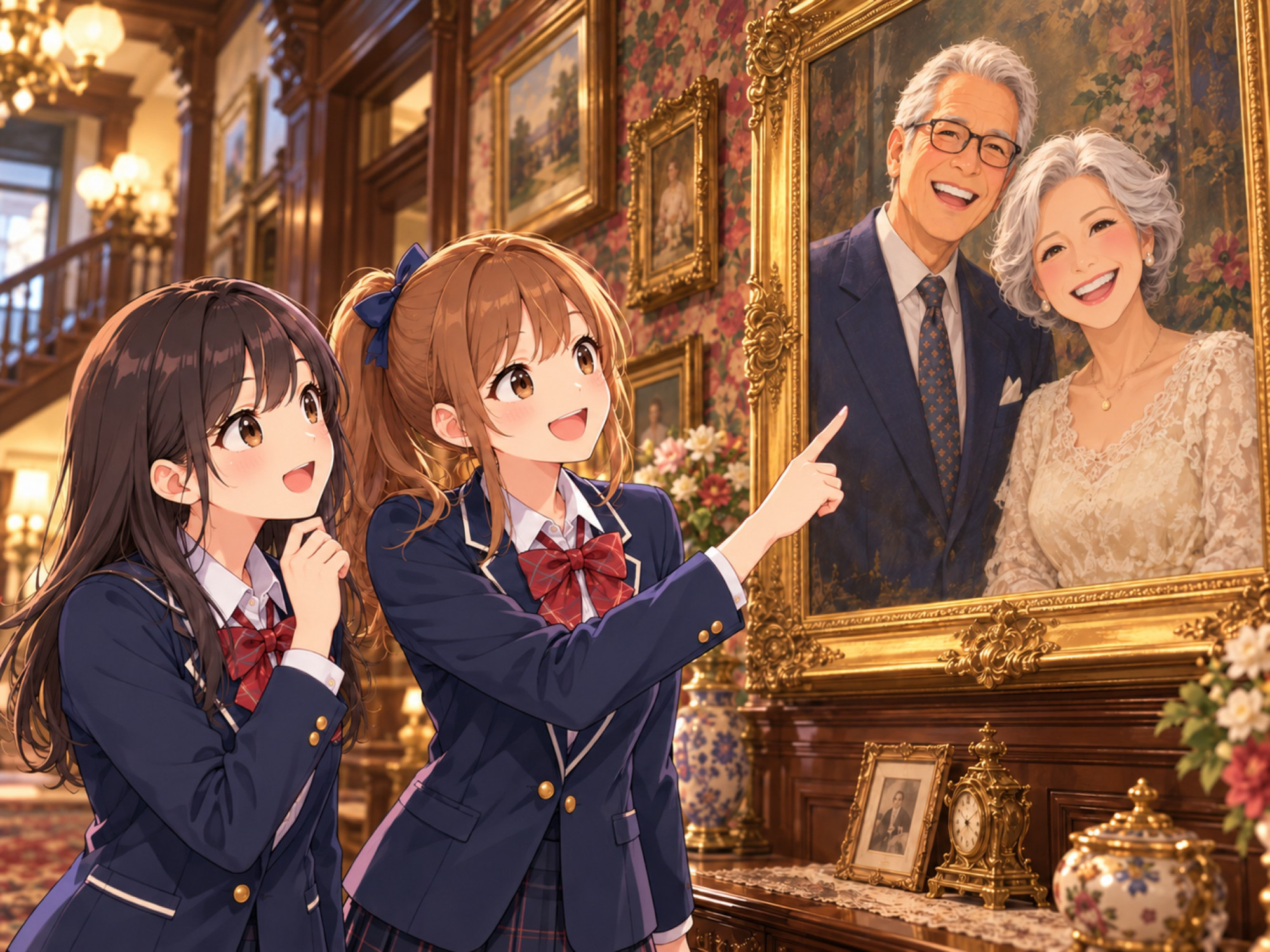 |
This is my grandmother and grandfather. |
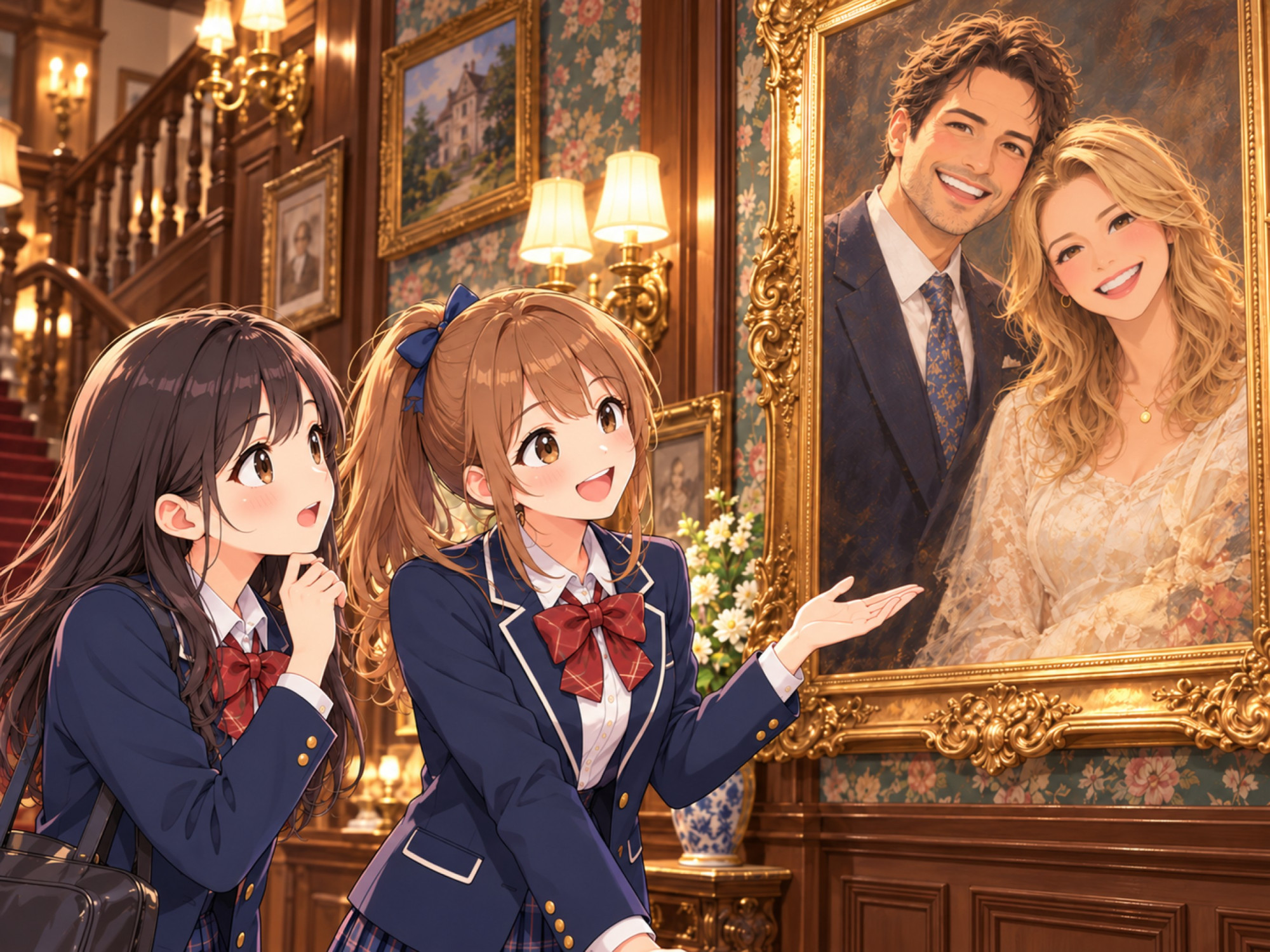 |
This is my mother and father. |
 |
This is my brother Bob, my sister Elaine, and me. |
Conversation
Jane and Keiko are relaxing on the couch.

Keiko: Wow Jane, your family portraits are beautiful! The children are so cute!
Jane: Thanks Keiko. My grandparents live only two miles away.
Keiko: That is very nice to have them so close.
Jane: Yes, it is.
Jane: My mom and dad are pretty cool most of the time.
Keiko: I look forward to meeting your parents.
Grammar in this Lesson
Use This is to introduce one pictured person or group in a family portrait. It points to something near the speaker and says who it is.
“This is my grandmother and grandfather.”
“This is my mother and father.”
This lesson uses common nouns for family words like brother, sister, and children. It also uses proper nouns like Bob, Elaine, Keiko, and Jane for specific people.
“This is my brother Bob, my sister Elaine, and me.”
“Keiko: Wow Jane, your family portraits are beautiful! The children are so cute!”
Vocabulary
Here, 'family' means the people who are related to you, like parents, children, grandparents, and siblings.
In the passage“name common family members”
“talk about their family in very simple sentences”
-
My family eats dinner together every night.私の家族は毎晩一緒に夕食を食べます。
-
She spent the holidays with her family.彼女は休暇を家族と過ごしました。
Here, 'grandmother' means your father's or mother's mother.
In the passage“This is my grandmother and grandfather.”
-
My grandmother makes delicious cookies.私の祖母はおいしいクッキーを作ります。
-
I visit my grandmother on Sundays.私は日曜日に祖母を訪ねます。
Here, 'grandfather' means your father's or mother's father.
In the passage“This is my grandmother and grandfather.”
-
My grandfather likes to tell stories from his childhood.私の祖父は子どものころの話をするのが好きです。
-
We went fishing with our grandfather.私たちは祖父と一緒に釣りに行きました。
Here, 'mother' means a person's female parent.
In the passage“This is my mother and father.”
-
My mother works at a hospital.私の母は病院で働いています。
-
I made a card for my mother.私は母のためにカードを作りました。
Here, 'father' means a person's male parent.
In the passage“This is my mother and father.”
-
My father drives me to school.私の父は私を学校まで車で送ってくれます。
-
I asked my father for advice.私は父にアドバイスを求めました。
Here, 'brother' means a male sibling, especially one in the same family.
In the passage“This is my brother Bob, my sister Elaine, and me.”
-
My brother plays soccer after school.私の兄は放課後にサッカーをします。
-
I share a room with my brother.私は兄と部屋を共有しています。
Here, 'sister' means a female sibling, especially one in the same family.
In the passage“This is my brother Bob, my sister Elaine, and me.”
-
My sister loves to draw pictures.私の姉は絵を描くのが大好きです。
-
I went shopping with my sister.私は姉と買い物に行きました。
Here, 'mom' means mother in an informal, everyday way.
In the passage“Jane: My mom and dad are pretty cool most of the time.”
-
My mom is making lunch.お母さんが昼食を作っています。
-
I called my mom after school.私は放課後にお母さんに電話しました。
Here, 'dad' means father in an informal, everyday way.
In the passage“Jane: My mom and dad are pretty cool most of the time.”
-
My dad reads the newspaper every morning.お父さんは毎朝新聞を読みます。
-
Dad helped me fix my bike.お父さんが私の自転車を直すのを手伝ってくれました。
Here, 'children' means young people, or sons and daughters together.
In the passage“The children are so cute!”
-
The children played in the park after school.子どもたちは放課後に公園で遊びました。
-
These children are learning how to read and write.これらの子どもたちは読み書きを学んでいます。
Here, 'parent' means a mother or a father.
In the passage“Keiko: I look forward to meeting your parents.”
-
My parents came to the school meeting.私の親は学校の会議に来ました。
-
Parents should encourage their children to study.親は子どもたちが勉強するように励ますべきです。
Quizzes
What did you think of this lesson?
Ask a question or share a thought — I read every one.