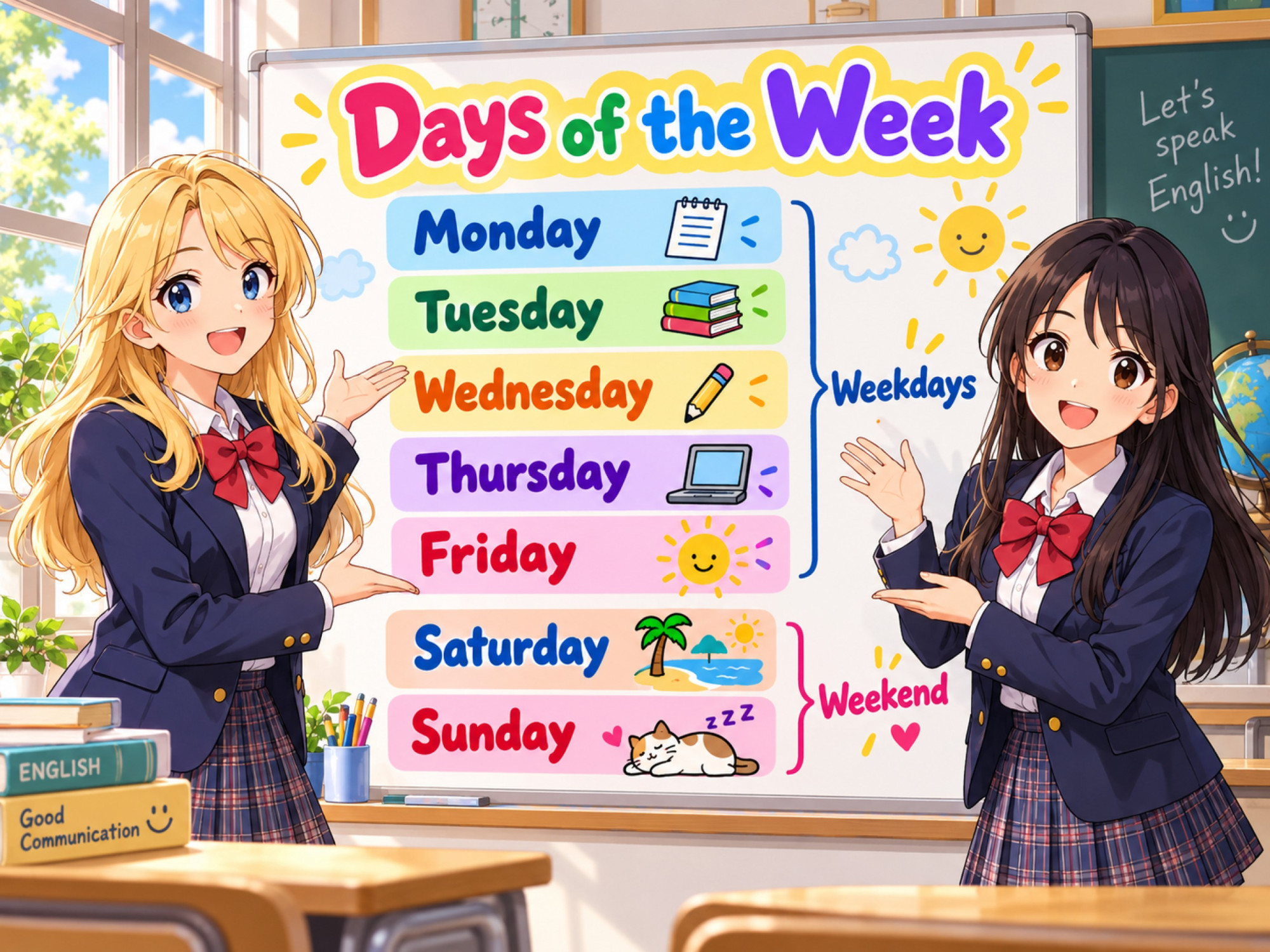
Lesson Goals
- learn the days of the week
- ask "what day is today?"
- learn how to use "today", "yesterday", and "tomorrow"
Let's Start
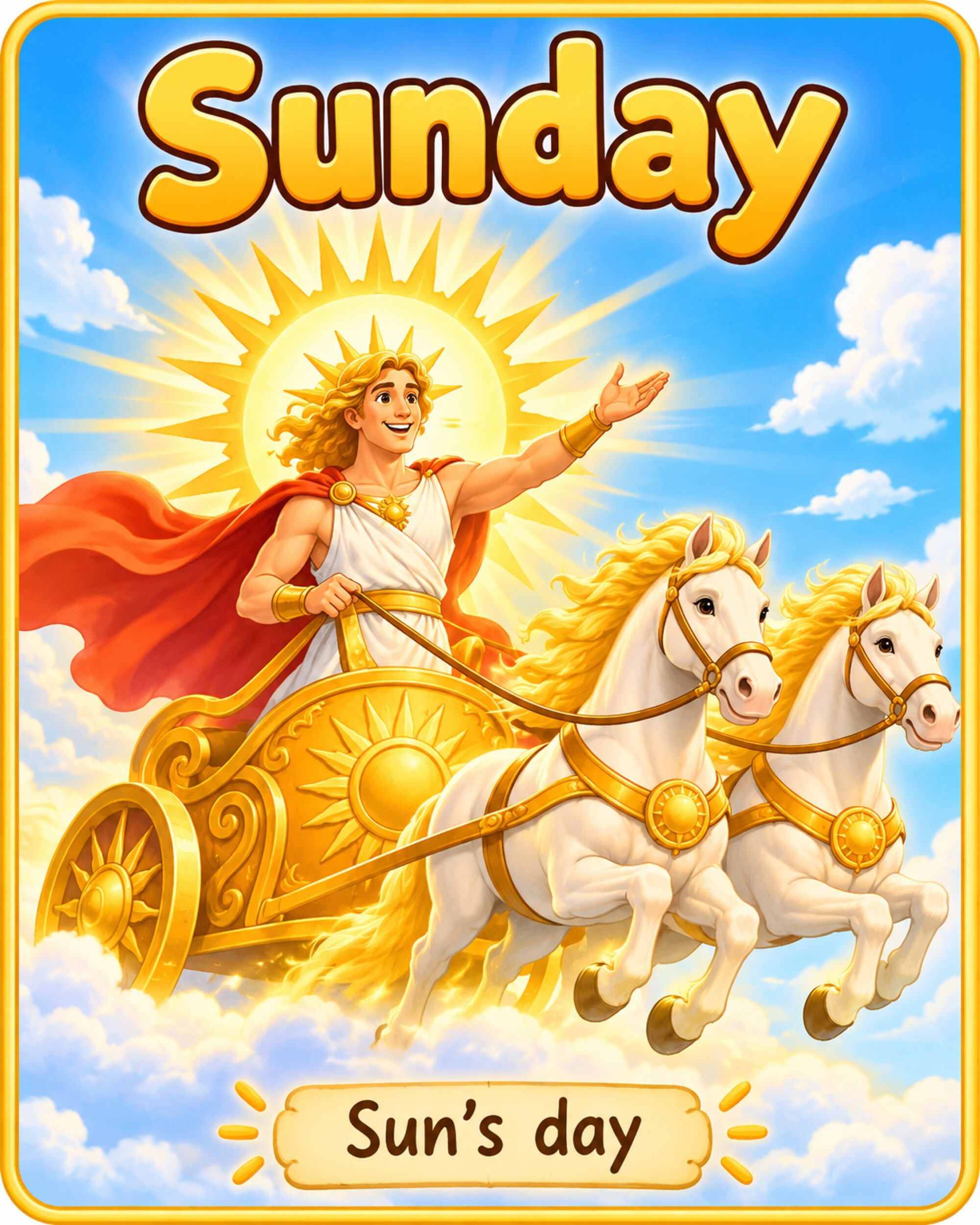 |
Sunday, the day of the sun. |
 |
Monday, the day of the moon. |
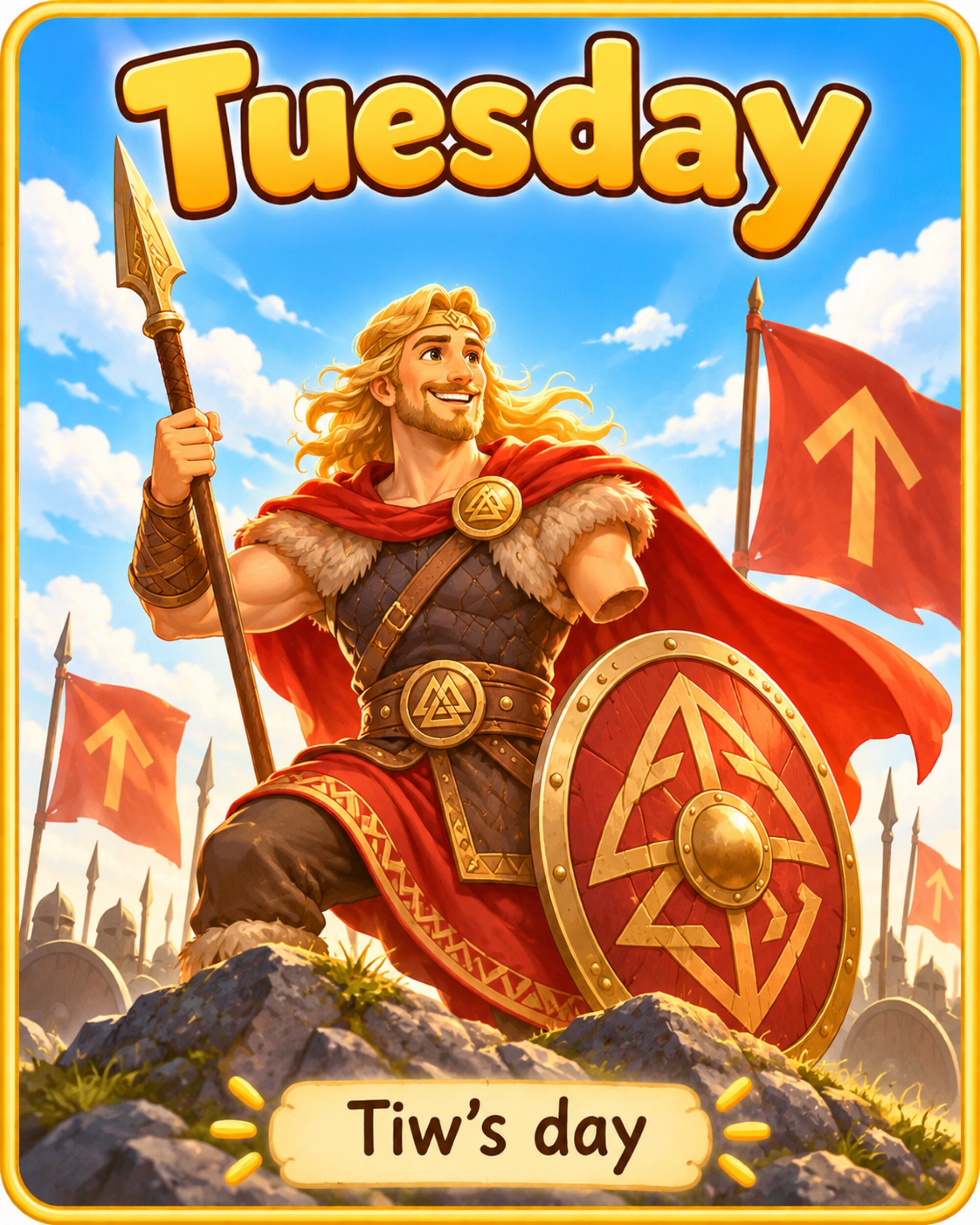 |
Tuesday, Tiw's day. Tiw was the Old English/Germanic god of war, law, and heroic courage. |
 |
Wednesday, Woden's day. Woden was the Old English form of Odin, the major Germanic/Norse god associated with wisdom, knowledge, magic, poetry, and war. |
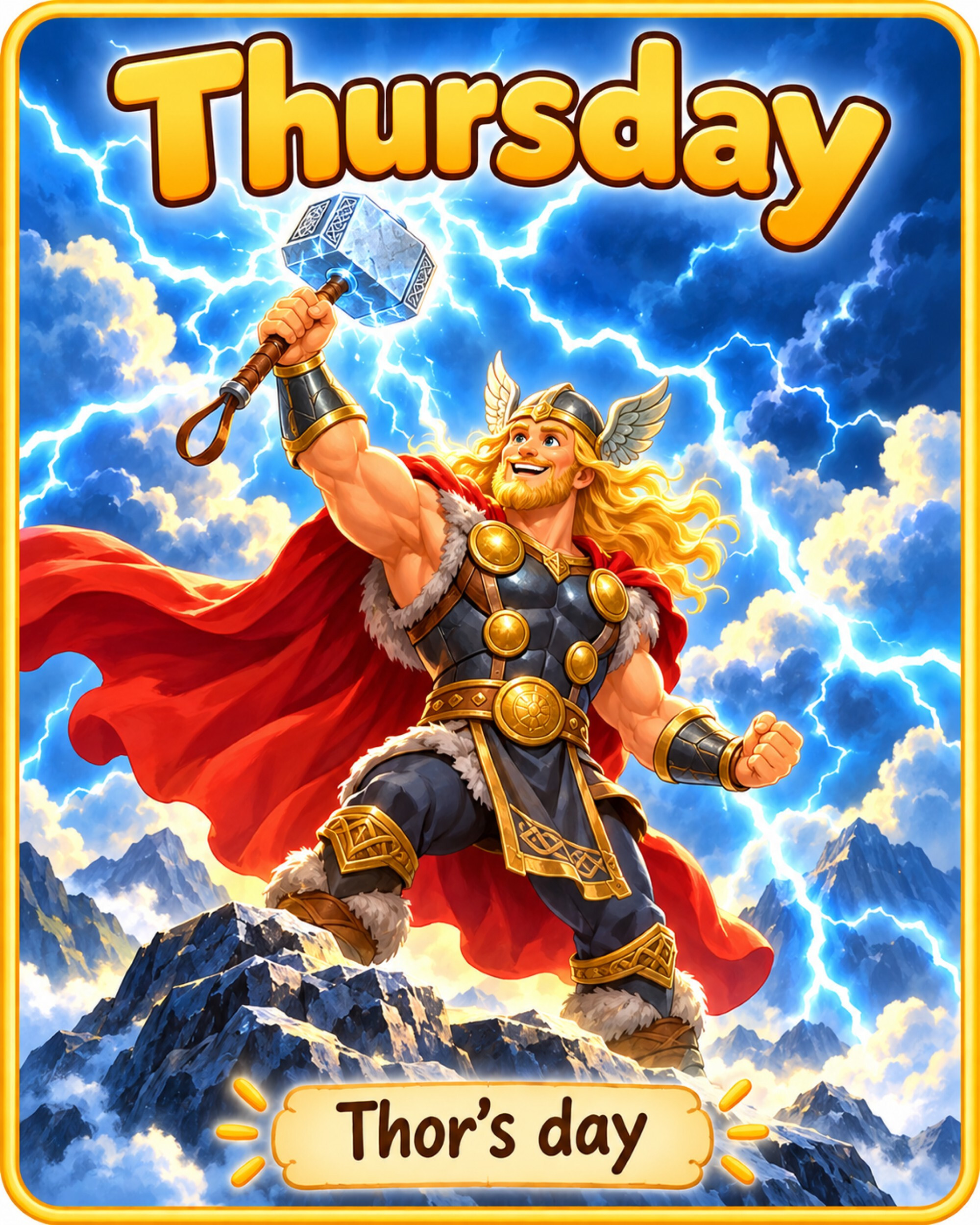 |
Thursday, Thor's day. Thor was the Norse/Germanic god of thunder, storms, strength, and protection. |
 |
Friday, Frigg's day. Frigg was a major Norse/Germanic goddess, especially associated with marriage, family, motherhood, household life, and foresight. |
 |
Saturday, Saturn's day. Saturn was an ancient Roman god of agriculture, sowing, and harvest. |
Conversation
Jane and Keiko discuss their plans for this week.

Jane: What day is today?
Keiko: Today is Monday.
Jane: What did you do yesterday?
Keiko: Yesterday I went shopping.
Jane: Are you busy tomorrow?
Keiko: No, tomorrow I am not busy.
Jane: Would you like to go to the movies on Friday?
Keiko: Yes, Friday will be fun!
Grammar in this Lesson
Prepositions
Time Using "at," "on" & "in"
A1
Use on with a day of the week, like on Friday. This lesson also shows Friday used with future meaning in a plan.
In the passage
View the full grammar point
“Would you like to go to the movies on Friday?”
“Keiko: Yes, Friday will be fun!”
Questions and Negatives
Yes-No Questions with "be"
A1
Use be before the subject in a yes-no question: Are you busy tomorrow? The answer uses be too: I am not busy.
In the passage
View the full grammar point
“Jane: Are you busy tomorrow?”
“Keiko: No, tomorrow I am not busy.”
Vocabulary
In the passage
“Sunday, the day of the sun.”
-
I usually relax on Sunday.私はふつう日曜日にくつろぎます。
-
Our family dinner is on Sunday.私たちの家族の夕食は日曜日です。
In the passage
“Monday, the day of the moon.”
“Keiko: Today is Monday.”
-
I start work on Monday.私は月曜日に仕事を始めます。
-
Monday mornings are always busy.月曜の朝はいつも忙しいです。
In the passage
“Tuesday, Tiw's day.”
-
The meeting is on Tuesday.会議は火曜日です。
-
I go swimming every Tuesday.私は毎週火曜日に泳ぎに行きます。
In the passage
“Wednesday, Woden's day.”
-
My class meets on Wednesday.私の授業は水曜日にあります。
-
Wednesday is halfway through the workweek.水曜日は平日のちょうど真ん中です。
In the passage
“Thursday, Thor's day.”
-
The report is due on Thursday.レポートの締め切りは木曜日です。
-
We go to the library every Thursday.私たちは毎週木曜日に図書館へ行きます。
In the passage
“Friday, Frigg's day.”
“Jane: Would you like to go to the movies on Friday?”
-
We have a test on Friday.私たちは金曜日にテストがあります。
-
Friday night is my favorite time of the week.金曜の夜は私の一番好きな週の時間です。
In the passage
“Saturday, Saturn's day.”
-
We went shopping on Saturday.私たちは土曜日に買い物に行きました。
-
Saturday is a good day to rest.土曜日は休むのに良い日です。
In the passage
“ask "what day is today?"”
“learn how to use "today", "yesterday", and "tomorrow"”
-
I have a meeting today.今日は会議があります。
-
Today is warmer than yesterday.今日は昨日より暖かいです。
In the passage
“learn how to use "today", "yesterday", and "tomorrow"”
“Jane: What did you do yesterday?”
-
I finished my homework yesterday.私は昨日宿題を終えました。
-
Yesterday was very busy.昨日はとても忙しかったです。
In the passage
“learn how to use "today", "yesterday", and "tomorrow"”
“Jane: Are you busy tomorrow?”
-
We will travel tomorrow.私たちは明日旅行します。
-
Tomorrow is my day off.明日は私の休みの日です。
Quizzes
What did you think of this lesson?
Ask a question or share a thought — I read every one.