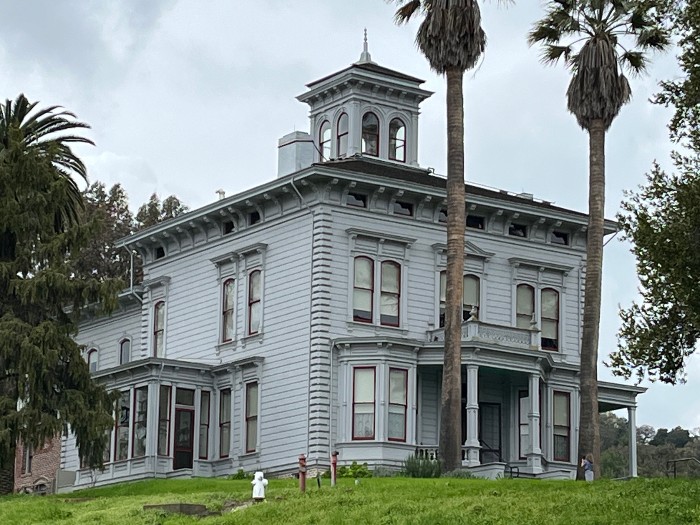
As I walked up the incline to the Strentzel Muir House, it reminded me of the Bates House in the Hitchcock movie, Psycho. Well, maybe that's a bit of an exaggeration, but it did cross my mind. And then one of the people touring the home remarked that he felt that there were ghosts in the house. He said it in all seriousness to the docent as I overheard their conversation, and it gave me shivers down my spine! And if you were wondering, no, I saw no ghosts in the Muir House, but that doesn't mean that they aren't there!
Ok, regardless, the Strentzel Muir House is a great find that impressed me deeply. I knew of John Muir at a superficial level before this visit. I knew he was an environmentalist, a naturalist and conservation advocate who was largely responsible for the creation of Sequoia and Yosemite national parks.
But I never knew that Muir lived in Martinez, and had a lucrative fruit tree farm to subsidize his travels and activities. Of course there's a backstory on how this came to be, so let me fill you in...
Some Family History
The estate now known as Strentzel Muir House was originally built in 1882 by Dr. John Strentzel. Dr. Strentzel was born in Poland, and came to the United States in 1840, settling in Texas. There, he married Louisiana Erwin in 1843, and together they moved to a few locations in California. Most notably during the gold rush years, they lived along the Tuolumne river, and in 1849 ran a ferry, general store and hotel.
In 1846 Louisiana gave birth to a daughter, Louisa, who was nicknamed "Louie." A few years later she bore a son, John, and a few years after that bore another daughter, Carlotta. Unfortunately Carlotta would only live 4 months.
Louisiana was experiencing health issues during this period and so I believe they attempted to find a place to live that would be conducive to Louisiana's recovery. After a couple of other stops near the Merced River and Benicia, they were advised by a friend to move to the Alhambra Valley, where the weather is mild year-round. This was before Martinez became a city in 1876, though there was a ferry already running between Benicia and the Martinez Trading Post.
So in 1853, the family relocated to the Alhambra Valley near Martinez, where Dr. Strentzel purchased 20 acres of land. He had decided to plant fruit trees on this property, and experiment with fruit-growing techniques. Louisiana's health had been restored just prior to moving here, and so she was able to play an important role in running the family’s operations, including managing the Chinese workers that tended the orchards. The Strentzels' son John passed away at age 9. This left only Louie and her parents living in the house. Louisiana made sure that Louie received an extensive education and pursued her talent as a pianist. Louie attended college at Miss Atkins Young Ladies Seminary in Benecia in 1859. Today the school is known as Mills College; it moved to Oakland in 1871 as Mills Seminary. John Muir and Louisa first met in Oakland, at the home of Dr. and Mrs. Carr, a mutual friend, on September 15, 1874.
In 1879, Louie became formally engaged to John Muir. They were married on April 14, 1880, in the Strentzel family's ranch house. The next day, Muir left for his first trip to Alaska. That must have been awkward!
By that time, Dr. Strentzel's ranch covered 2,600 acres, and he was growing over 1,000 varieties of fruit trees. For the subsequent 10 years John Muir worked with Dr. Strentzel to manage the orchards.
On March 25, 1881, Louie gave birth to their first child, a daughter they named Wanda. In 1886 the Muirs had another daughter, Helen. Now a family of four, they enjoyed their life in the Alhambra valley, working and playing at the Strentzel ranch.
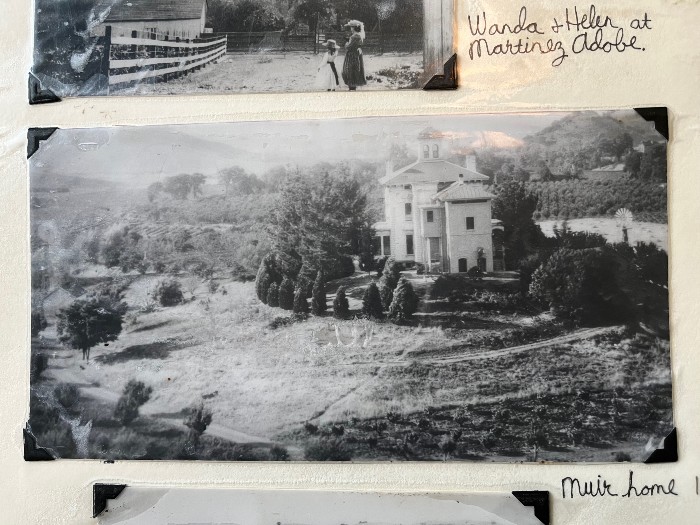
Dr. Strentzel eventually left the Muir family the entire ranch. John Muir used the income to support his writing and passion for nature. Dr. Strentzel died in 1890, at which time the Muir family moved into the home.
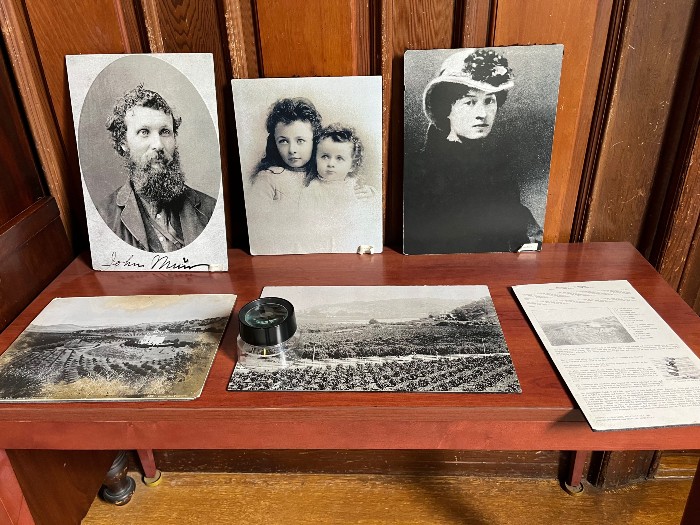
Eventually John Muir became disenchanted with his life, in particular his duties managing the ranch he inherited. With Louie's blessing, he went on extended trips to locations all over the United States, including Alaska, Arizona, and the Sierras, to fulfill his future legacy. Louie and John communicated regularly by mail, exchanging descriptions of his adventures with stories of the ranch and their children.
Louie died relatively young of lung cancer in 1905. John was by her side when she passed. Devastated, John owed Louie a lot for allowing him to become a nationally recognized conservationist while she maintained the Muir household singlehandedly.
Louie was buried in the Strentzel-Muir Cemetery a mile from the family’s ranch home. John died on December 24, 1914, of pneumonia. His body was laid to rest next to Louie’s. I did not make it to the cemetery for this lesson - it will be included in my next trip up to Martinez.
More About the House
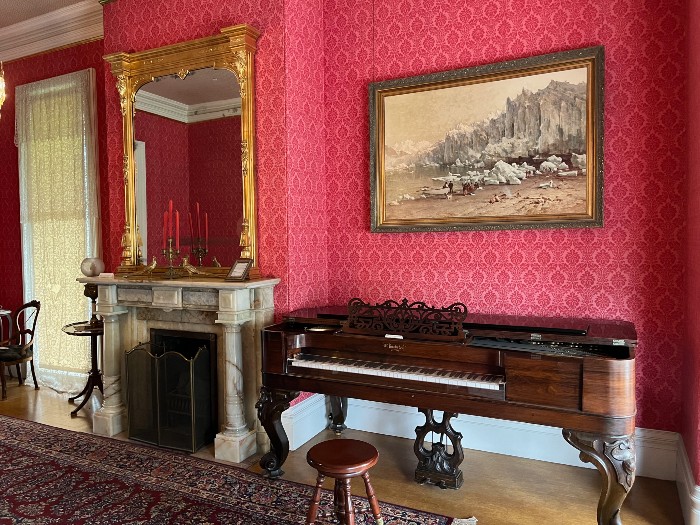
I've included some pictures of some of the rooms below. The furniture in the home is not the original except for two bookcases—the one on the first floor and the other in Muir's upstairs study.
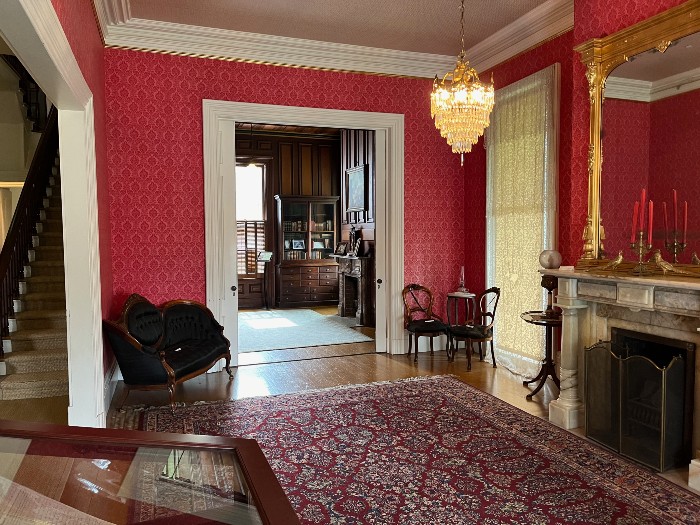
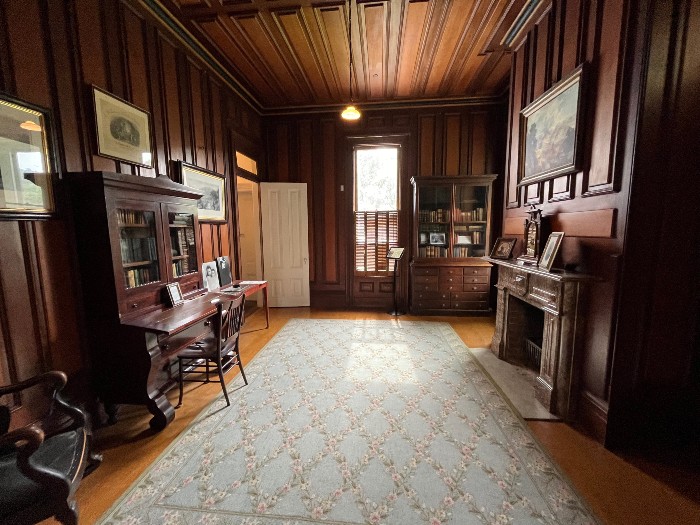
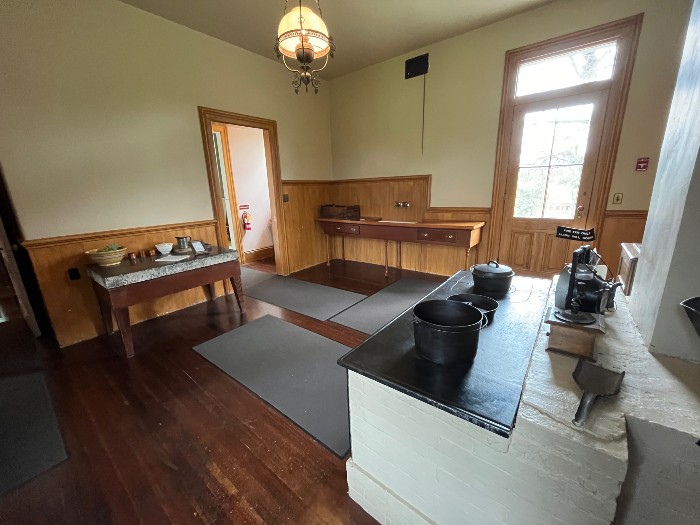
The East Parlor was renovated after it was damaged during the 1906 earthquake. He wanted to simplify it from its original design, and added a brick fireplace to the room.

Finally, there is an attic that you can visit on the third floor.
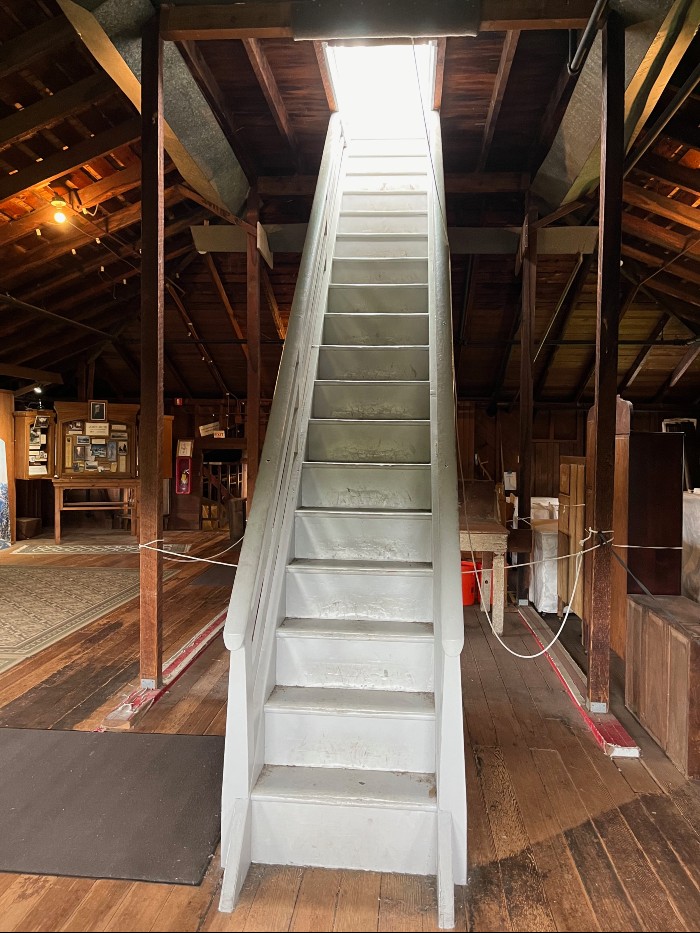
There is a display there of Muir mementos, and a staircase up to the bell tower. From there you can see a nice panorama of the orchards and surrounding area. Don't miss it!
Location
Vocabulary
Flash Card Drill-
After the storm, the town was left devastated.嵐の後、町は荒廃したままとなった。
-
She felt utterly devastated by the loss of her pet.彼女はペットの喪失に完全に荒廃したと感じた。
-
He found a lucrative job in the tech industry.彼は技術業界で利益のある仕事を見つけました。
-
Investing in real estate can be very lucrative.不動産への投資は非常に利益のあることです。
-
She is a well-known advocate for environmental protection.彼女は環境保護のための有名な支持者です。
-
The lawyer was an advocate for human rights.その弁護士は人権の支持者でした。
-
As an environmentalist, he fights for sustainable practices.環境保護者として、彼は持続可能な慣行のために戦っています。
-
Environmentalists are advocating for a cleaner planet.環境保護者たちはより清潔な地球を支持しています。
-
The quiet room is conducive to studying.この静かな部屋は勉強に助けになります。
-
A good diet is conducive to good health.良い食事は健康に助けになります。
-
The naturalist observed the behavior of the birds.その自然主義者は鳥の行動を観察しました。
-
As a dedicated naturalist, she spends hours in the field.熱心な自然主義者として、彼女は野外で何時間も過ごします。
-
She kept many momentos from her travels.彼女は旅行から多くの記念品を保管していました。
-
These momentos remind me of our childhood.これらの記念品は私たちの子供時代を思い出させてくれます。
-
The government plans to subsidize the renewable energy sector.政府は再生可能エネルギー部門を補助金で支援する計画です。
-
Many organizations subsidize educational programs for underprivileged children.多くの組織が恵まれない子供たちのための教育プログラムを補助金で支援しています。
-
His understanding of the topic was quite superficial.彼のそのトピックに関する理解はかなり表面的でした。
-
Many celebrities live a superficial lifestyle.多くの有名人は表面的なライフスタイルを送っています。
-
Conservation efforts are essential to protect endangered species.絶滅危惧種を保護するためには保全活動が不可欠です。
-
We need to focus on conservation to ensure a sustainable future.持続可能な未来を確保するためには保全に注力する必要があります。
Quizzes
What did you think of this lesson?
Ask a question or share a thought — I read every one.