
A friend and I decided to take a look at the old red brick Justice Building on a weekday earlier this week after our excellent Thai buffet lunch in the Shin-Marunouchi Building.
We approached the main gate, which is where all employees go through too. There, I asked (in Japanese) if we could enter the building. The guard said no, we tourists cannot go in. Then I pressed him about reviews on the Google review website that said that tourists can enter the building. He denied us again.
Then, after showing him the English text of a review that outlined another person's experience, he caved in. He asked if we meant to see the Message Gallery. I was not sure, that name not being familiar to me. He said we could go there, so I said great, we want to do that. Then he turned to his colleague and said, "let them in, he speaks Japanese." It was a frustrating experience getting past this particular guard. He must have mentioned the Message Gallery up front. Anyway, we got a pass to get in (without showing ID) and were followed to the entrance by another guard, who shadowed us as we went inside the museum.
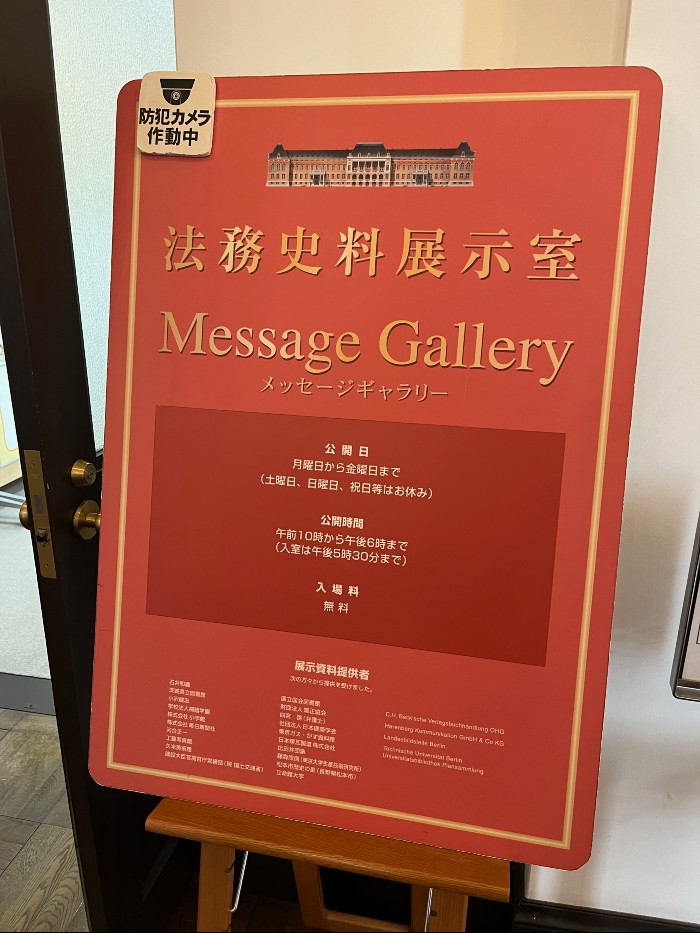
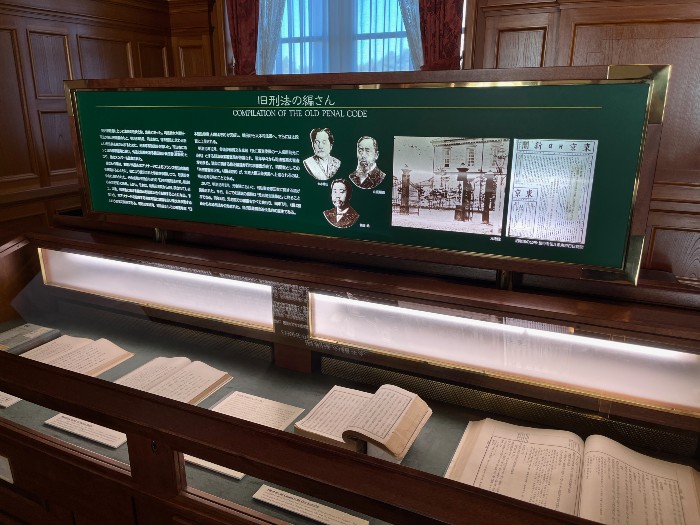
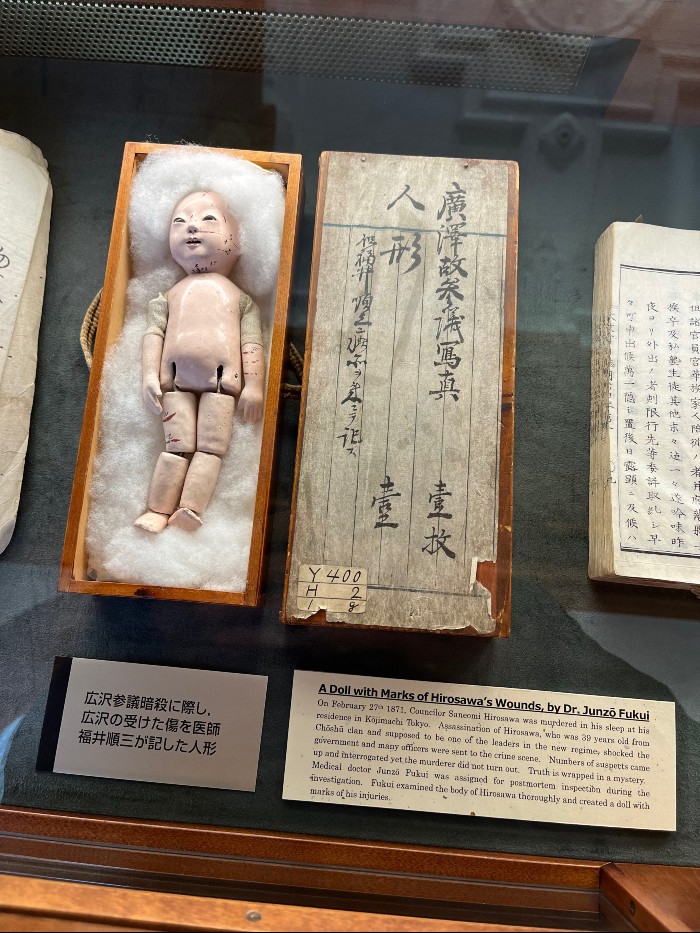
As for the museum itself, There are lots of interesting documents to view, and most have English explanations. The lady working at the museum spoke English and was very kind. Some of the notable documents included those related to the compilation of the old penal code and the registration of property.
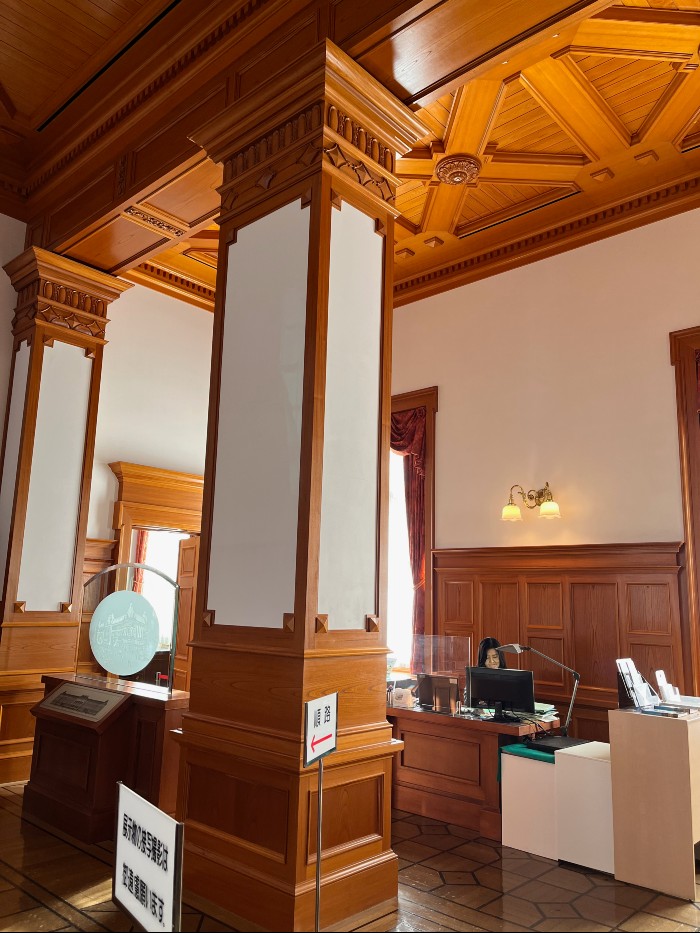
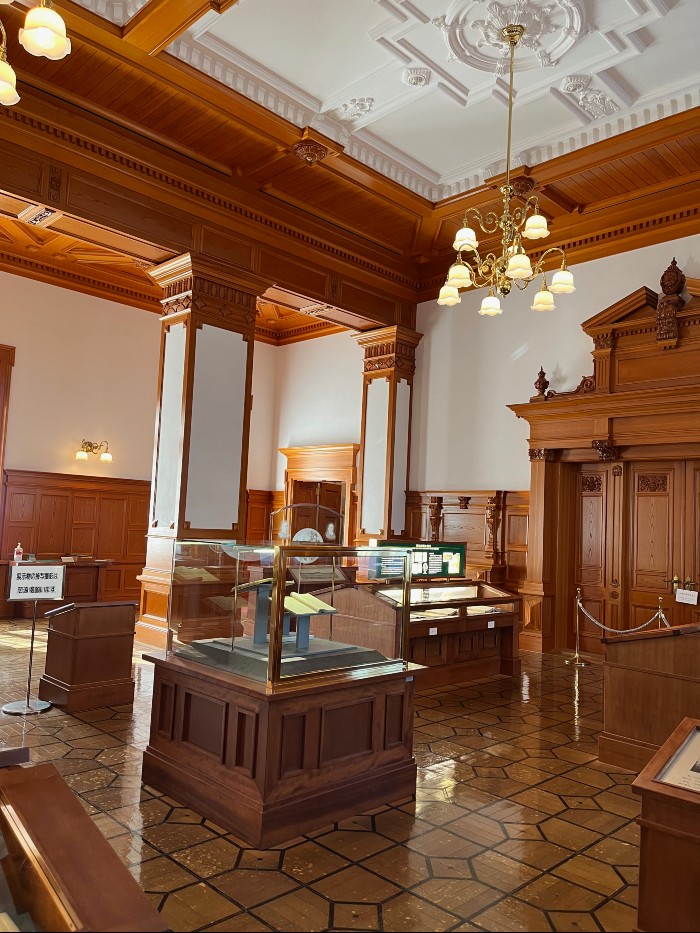
So why is this little museum called the Message Gallery? The direct translation of the Japanese name is Legal History Exhibition Room. That's a lot clearer than Message Gallery! Anyway, the museum only consists of a few rooms, but they are packed with a lot of information. There is even an English brochure, which is really well done.
Construction of the building itself, often referred to as the Red Brick Building, was started in 1888 and lasted for seven years. Its architects, Hermann Ende and Wilhelm Bockmann, were invited to Japan by the Meiji Government to build a series of government buildings in Tokyo. Ende brought a detailed architectural plan from Berlin in 1887. Unfortunately, due to fiscal issues, they were forced to limit construction to this and one other building.

The German neo-baroque building was built with the latest construction techniques to mitigate the damage of a large earthquake. These measures were put to the test in 1923 when Tokyo shook during the Great Kantō Earthquake. The innovative design passed the test. But, it could not withstand the war. In 1945 the building was bombed, and much of it was destroyed. It was promptly repaired in succeeding years, and was adopted as the main building for the Ministry of Justice.


Entry to the building is free, but as I mentioned above, you should state clearly that you want to see the Message Gallery, which the guards will understand.
Location
Vocabulary
Flash Card Drill-
We slowly approached the old building.私たちはゆっくりと古い建物に近づいた。
-
As the deadline approached, everyone worked faster.締め切りが近づくにつれて、みんなはもっと速く働いた。
-
It was frustrating to wait so long for a simple answer.簡単な答えを得るために長く待つのはもどかしかった。
-
Learning a new language can be frustrating but also rewarding.新しい言語を学ぶことはもどかしいこともあるが、やりがいもある。
-
The guide outlined the tour schedule for us.ガイドは私たちのためにツアーの日程の概要を示した。
-
The lawyer outlined the main points of the contract.弁護士は契約書の主なポイントを概要として示した。
-
One notable feature of the museum is its detailed English labels.その博物館の注目すべき特徴の一つは、詳しい英語のラベルである。
-
She made a notable contribution to the project.彼女はそのプロジェクトに注目すべき貢献をした。
-
The compilation of the new law took several years.新しい法律の編纂には数年かかった。
-
This book is a compilation of essays on Japanese history.この本は日本史に関するエッセイの編纂である。
-
Property registration helps protect ownership rights.財産の登録は所有権を守るのに役立つ。
-
Online registration for the event is now open.そのイベントのオンライン登録が現在受け付け中だ。
-
The museum consists of three main rooms.その博物館は三つの主な部屋で構成されている。
-
The committee consists of ten members.その委員会は十人のメンバーで構成されている。
-
The project was canceled due to fiscal problems.そのプロジェクトは財政上の問題により中止された。
-
The government announced new fiscal policies.政府は新しい財政上の政策を発表した。
-
Special construction techniques were used to mitigate earthquake damage.地震の被害を軽減するために特別な建設技術が使われた。
-
Wearing a seat belt helps mitigate the risk of injury.シートベルトを着用することはけがの危険を軽減するのに役立つ。
-
The building used an innovative design to resist earthquakes.その建物は地震に耐えるために革新的な設計を用いた。
-
Their company is known for its innovative products.彼らの会社は革新的な製品で知られている。
Quizzes
What did you think of this lesson?
Ask a question or share a thought — I read every one.