
Lesson Goals
- learn the twelve months of the year
- learn the four seasons
Let's Start
The Months!
First we will learn the names of each month of the year!
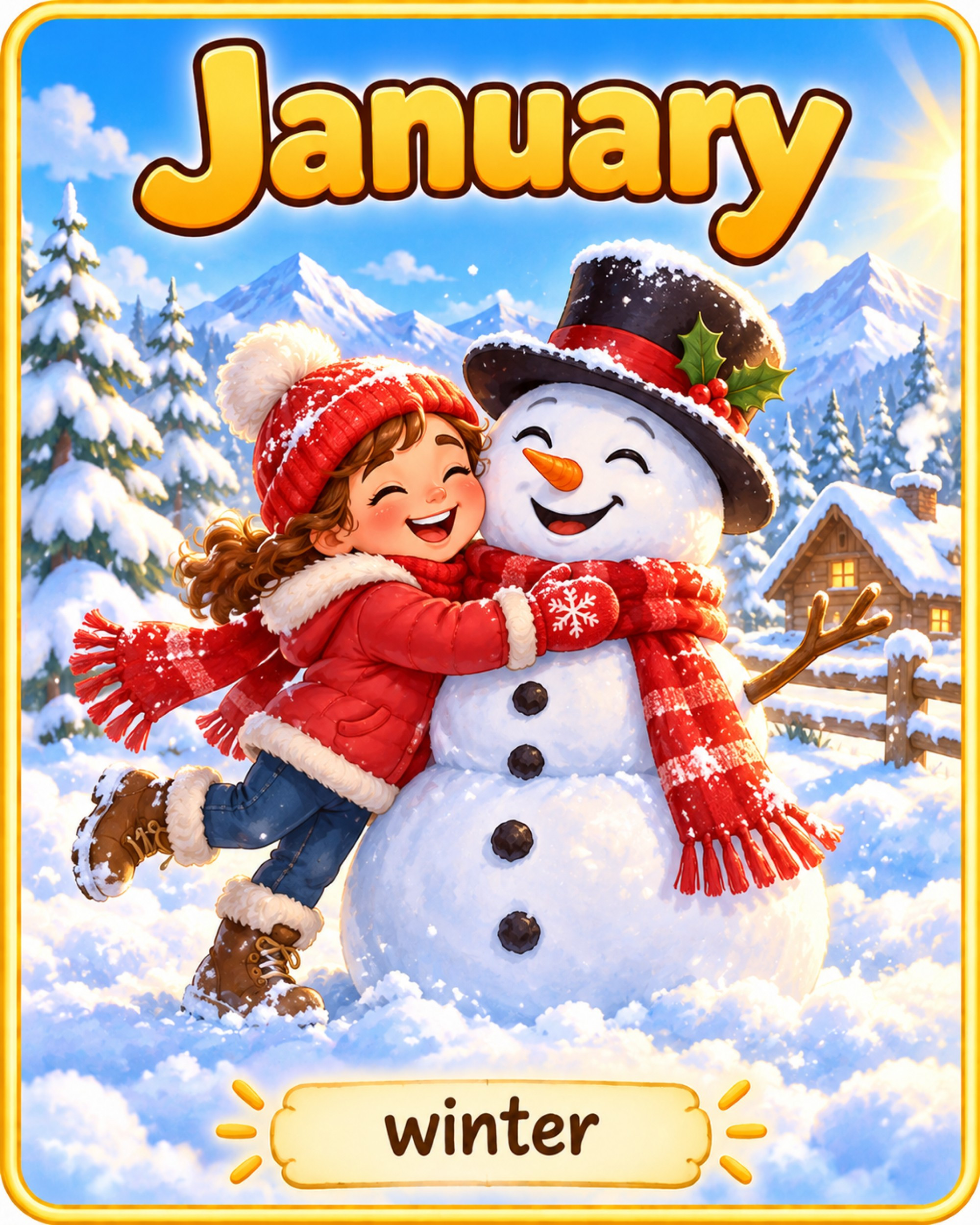 |
named for Janus, the Roman god of doors, beginnings, and transitions. He is often shown with two faces, looking backward and forward. |
 |
from Latin februa, referring to purification rites held in that month. |
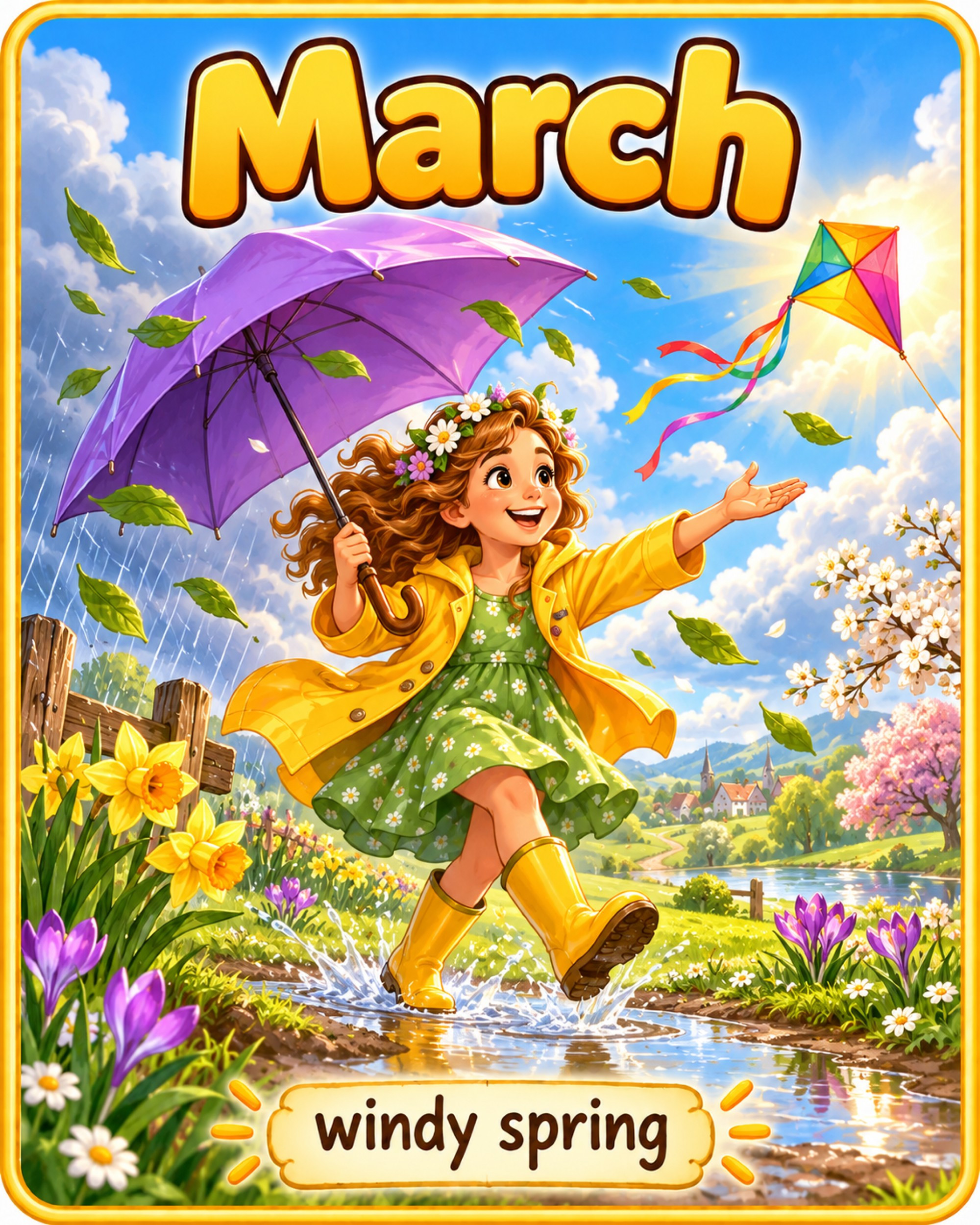 |
named for Mars, the Roman god of war. |
 |
uncertain origin. It may come from Latin aperire, “to open,” referring to flowers and plants opening in spring, but the origin is debated. |
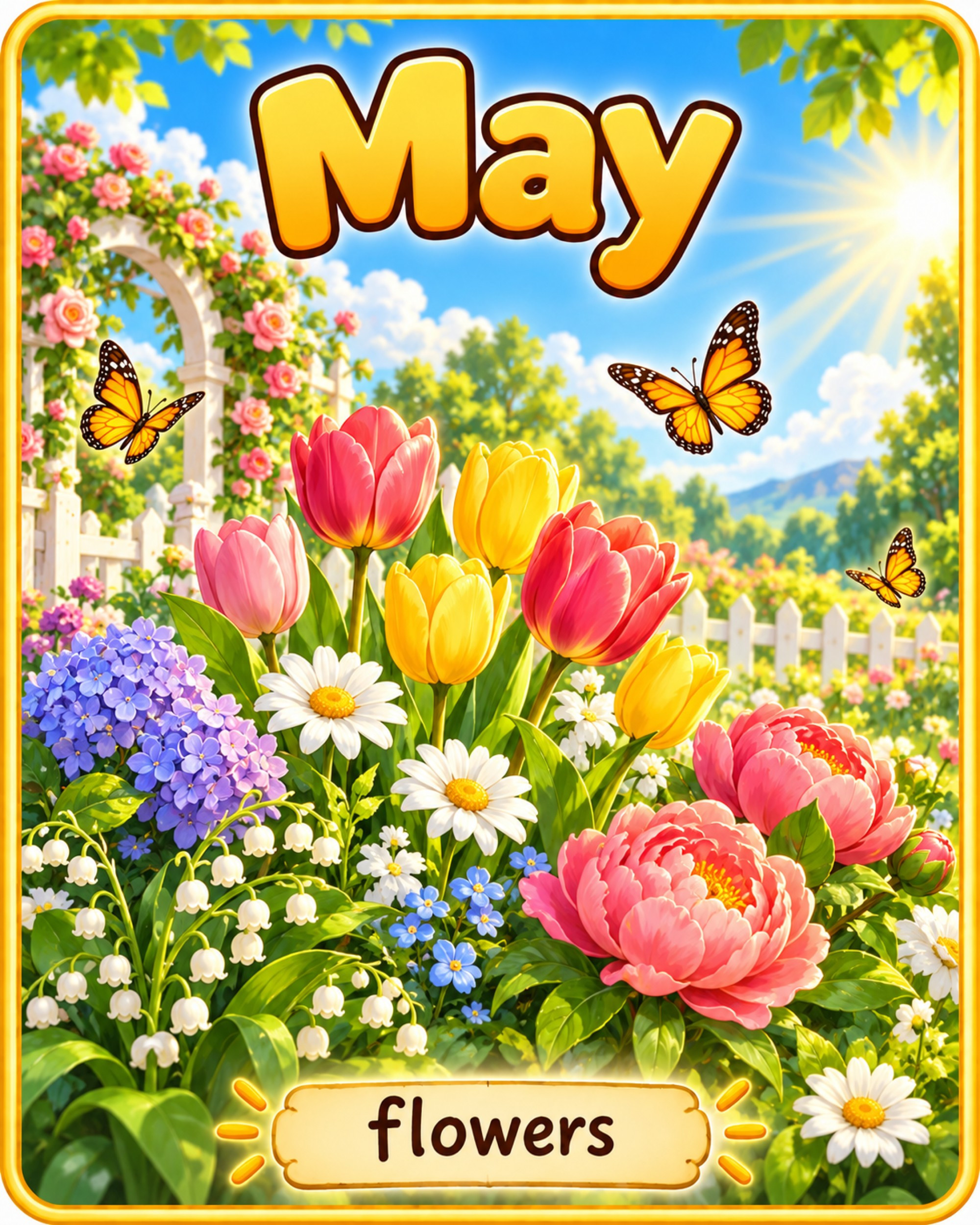 |
May probably named for Maia, a Roman/Greek goddess associated with growth. |
 |
probably named for Juno, the Roman goddess of marriage and women. |
 |
originally Quintilis, “fifth month,” then renamed for Julius Caesar. |
 |
originally Sextilis, “sixth month,” then renamed for Augustus Caesar. |
 |
from Latin septem, seven. |
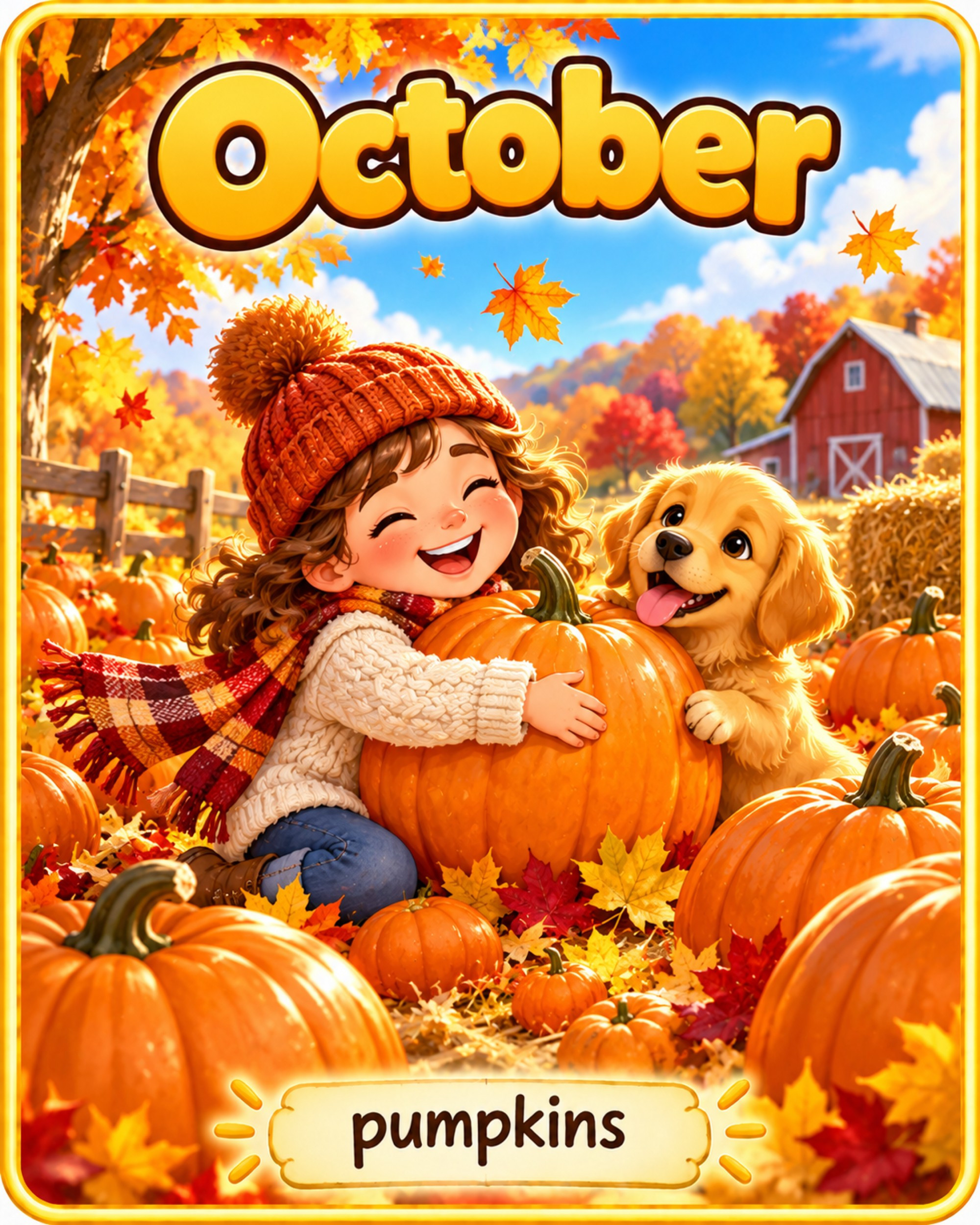 |
from Latin octo, eight. |
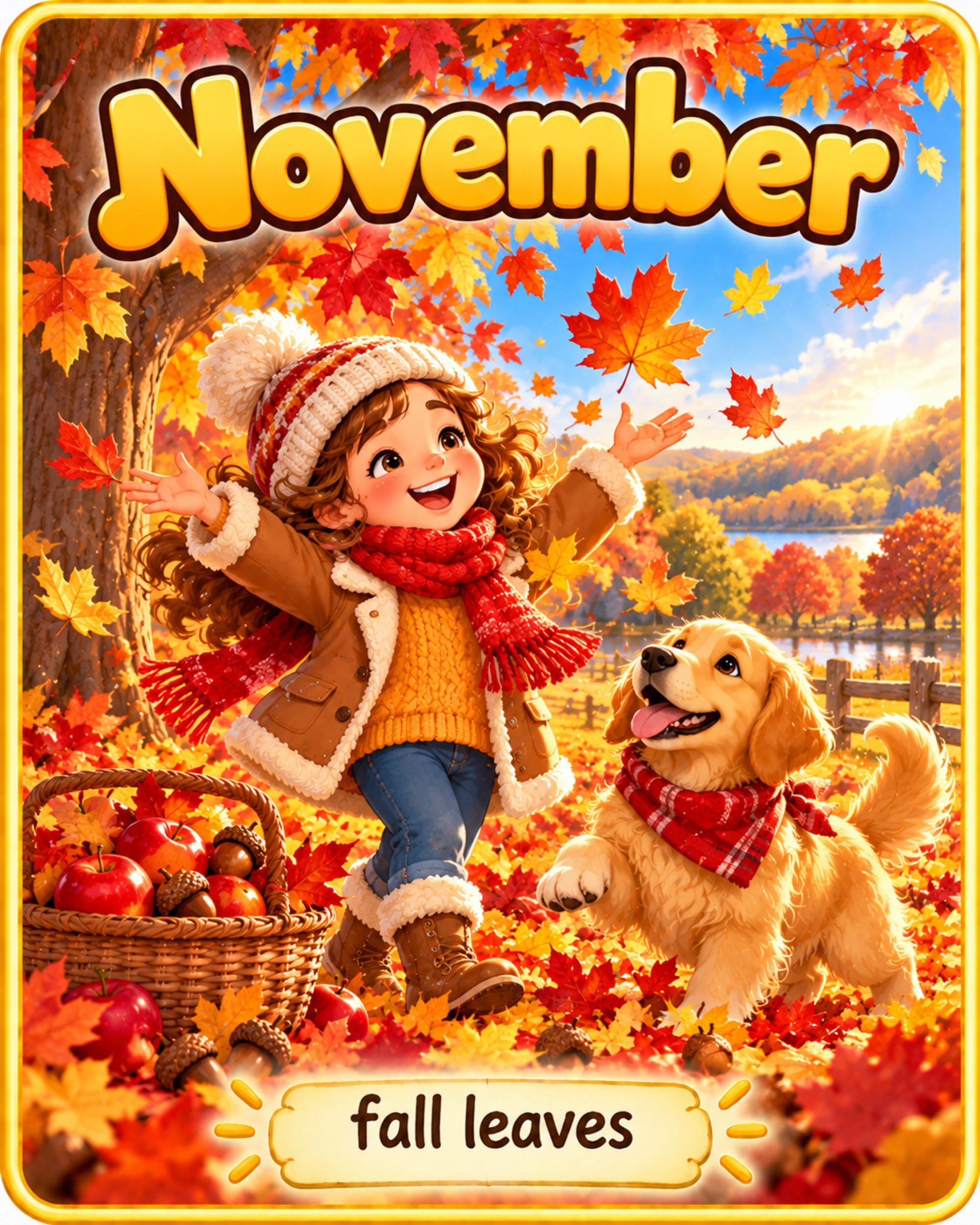 |
from Latin novem, nine. |
 |
from Latin decem, ten. |
The last four are especially interesting because they look “wrong” today. September is month 9, but its name means 7; October is 10 but means 8; November is 11 but means 9; December is 12 but means 10. That is because the old Roman calendar originally began in March.
The Seasons!
Now we will learn the four seasons!
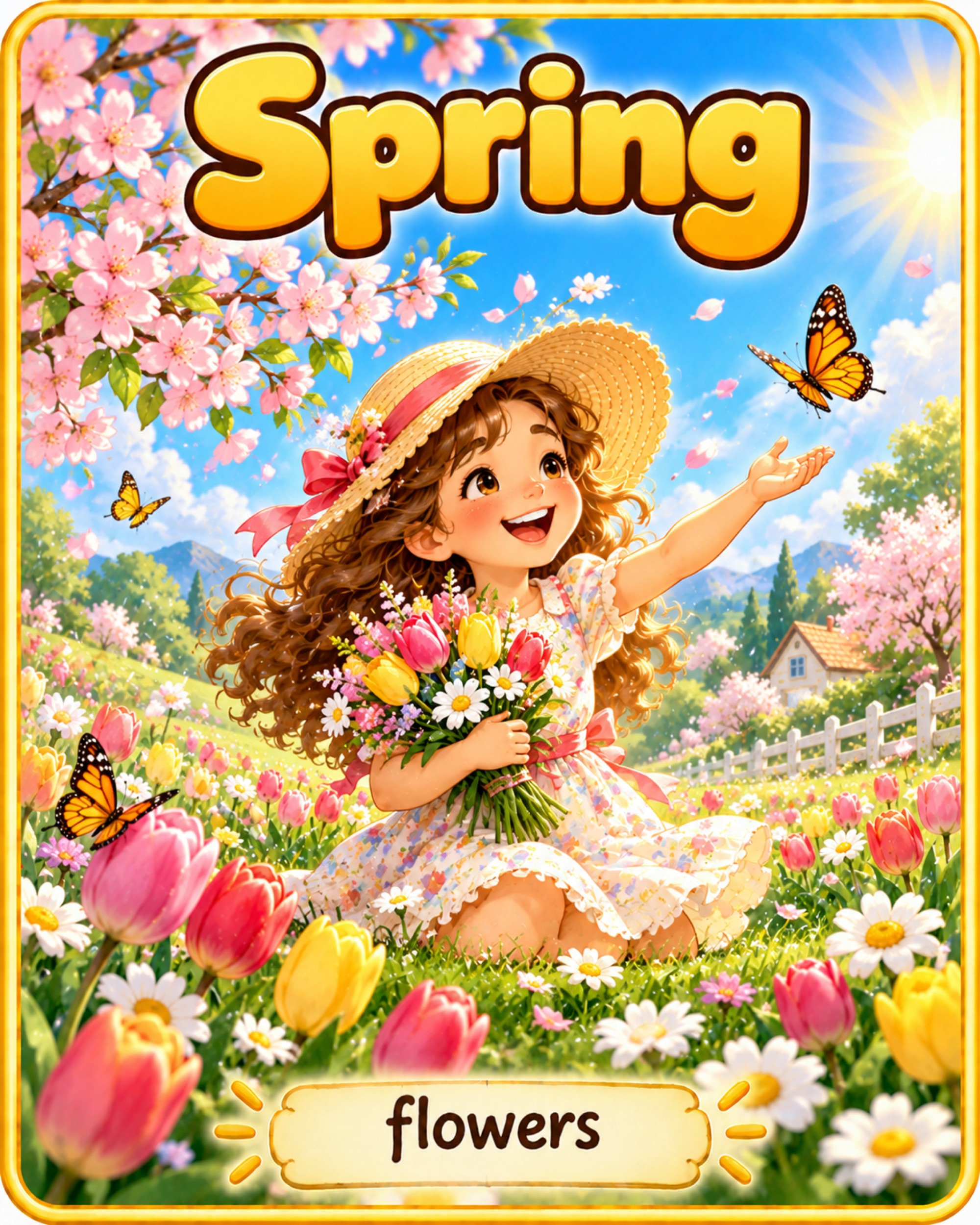 |
Spring originally referred to the springing up of plants. In Middle English people used phrases like “spring of the year” or “springing time,” and eventually spring became the season’s name. |
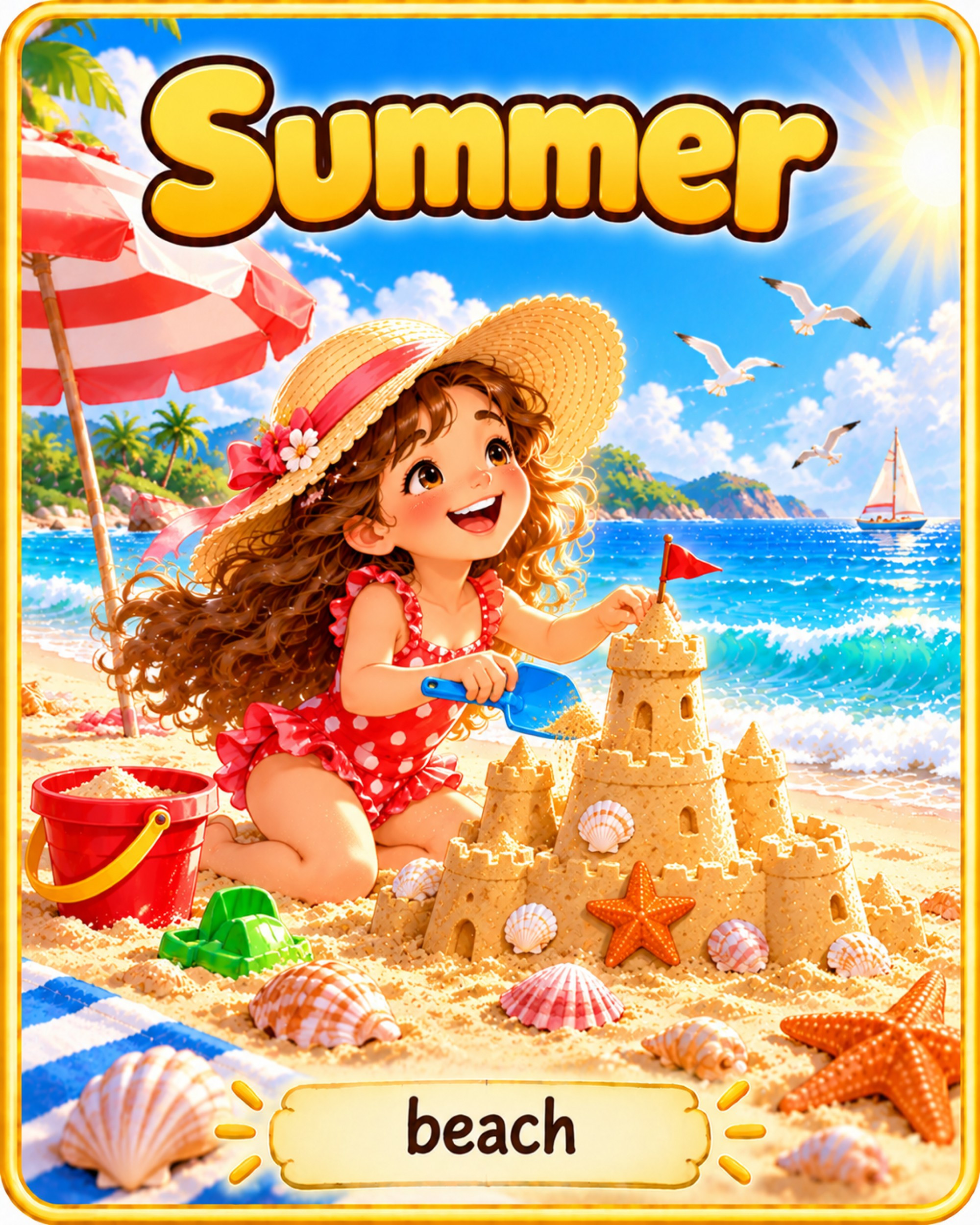 |
comes from Old English sumor, from an ancient Germanic word for the warm season. |
 |
comes from the phrase “fall of the leaf.” English speakers shortened that to fall. That usage became especially common in North America. came into English from French and ultimately Latin autumnus. Its deeper origin is uncertain. In Britain, autumn became more common, while fall remained very common in American English. |
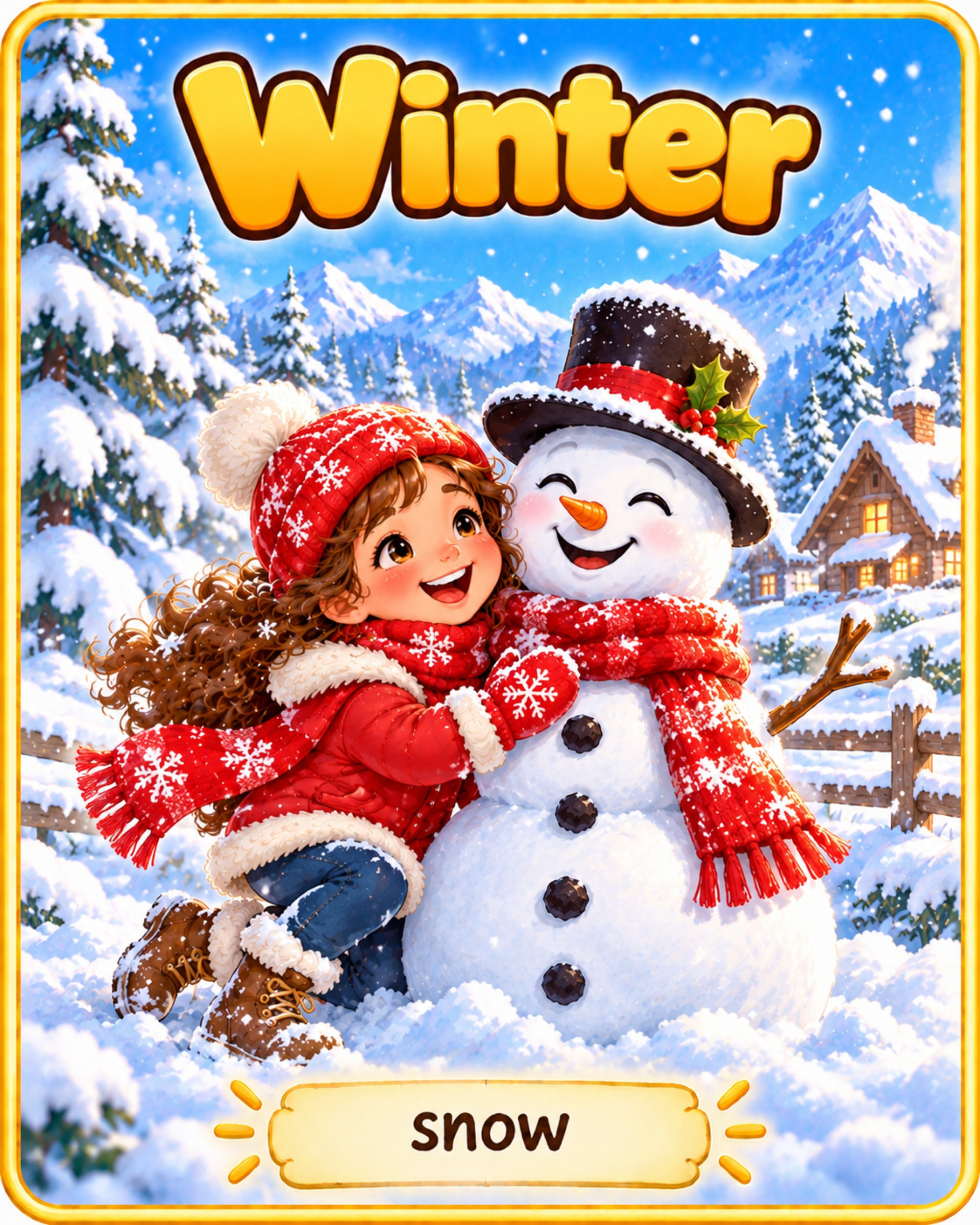 |
comes from Old English winter and is also an ancient Germanic word. Its ultimate origin is uncertain; some theories connect it with water/wet or with white, but those are not certain. |
Conversation
Keiko and Jane are talking in the park. It is a fall day.

Keiko: In which month were you born, Jane?
Jane: I was born in January. January 26th is my birthday.
Keiko: Oh, in the winter! It must have been cold.
Yes, but I do not remember. I was just a baby!
What is your birthday, Keiko?
My birthday is July 12th.
Maybe that is why you like summer so much!
Grammar in this Lesson
This lesson uses “in” for time periods like months, seasons, and countries/regions. For example, “in January,” “in the winter,” and “in Britain” show location or time inside a larger period/place.
“In Middle English people used phrases like “spring of the year” or “springing time,” and eventually spring became the season’s name.”
“In Britain, autumn became more common, while fall remained very common in American English.”
Wh-questions ask for missing information. Here, “In which month” asks for time, and “What” asks for a thing or fact.
“Keiko: In which month were you born, Jane?”
“What is your birthday, Keiko?”
Vocabulary
“January”
“Jane: I was born in January.”
-
My birthday is in January.私の誕生日は1月です。
-
We usually start our new project in January.私たちはたいてい1月に新しいプロジェクトを始めます。
“February”
-
Valentine's Day is in February.バレンタインデーは2月です。
-
February is the shortest month of the year.2月は一年で最も短い月です。
“March”
“That is because the old Roman calendar originally began in March.”
-
The project will finish in March.そのプロジェクトは3月に終わります。
-
It can still be cold in March.3月でもまだ寒いことがあります。
“April”
-
New students enter school in April.新しい生徒は4月に入学します。
-
Cherry blossoms bloom in April.桜は4月に咲きます。
“It may come from Latin aperire, “to open,” referring to flowers and plants opening in spring, but the origin is debated.”
“May”
-
My birthday is in May.私の誕生日は5月です。
-
We are planning to travel in May.私たちは5月に旅行する予定です。
“June”
-
My sister got married in June.私の姉は6月に結婚しました。
-
The rainy season often begins in June.梅雨は6月に始まることが多いです。
“July”
“My birthday is July 12th.”
-
The festival will be held in July.その祭りは7月に開かれます。
-
It is very warm in July.7月はとても暖かいです。
“August”
-
We went to the beach in August.私たちは8月にビーチへ行きました。
-
August is often very hot.8月はとても暑いことが多いです。
“September”
“September is month 9, but its name means 7; October is 10 but means 8; November is 11 but means 9; December is 12 but means 10.”
-
School starts again in September.学校は9月に再開します。
-
It usually rains a lot in September.9月はたいてい雨がよく降ります。
“October”
“September is month 9, but its name means 7; October is 10 but means 8; November is 11 but means 9; December is 12 but means 10.”
-
The leaves change color in October.10月には葉の色が変わります。
-
Halloween is celebrated in October.ハロウィンは10月に祝われます。
“November”
“September is month 9, but its name means 7; October is 10 but means 8; November is 11 but means 9; December is 12 but means 10.”
-
The weather starts to get colder in November.11月になると天気はだんだん寒くなります。
-
We will travel to Kyoto in November.私たちは11月に京都へ旅行します。
“December”
“September is month 9, but its name means 7; October is 10 but means 8; November is 11 but means 9; December is 12 but means 10.”
-
We always decorate the house in December.私たちはいつも12月に家を飾ります。
-
My birthday is in December.私の誕生日は12月です。
“It may come from Latin aperire, “to open,” referring to flowers and plants opening in spring, but the origin is debated.”
“Spring”
-
Flowers bloom in spring.春には花が咲きます。
-
The air feels fresh in spring.春には空気がさわやかに感じられます。
“Summer”
“Maybe that is why you like summer so much!”
-
We go to the beach every summer.私たちは毎年夏に海へ行きます。
-
Summer days are long and sunny.夏の日は長くて晴れています。
“Fall”
“comes from the phrase “fall of the leaf.” English speakers shortened that to fall.”
-
The leaves change color in fall.秋には葉の色が変わります。
-
The weather becomes cooler in fall.秋になると気候が涼しくなります。
“Autumn”
“In Britain, autumn became more common, while fall remained very common in American English.”
-
Autumn is the best time to see the changing leaves.秋は紅葉を見るのに最適な季節です。
-
We visited the mountains in autumn and enjoyed the cool air.私たちは秋に山へ行き、涼しい空気を楽しみました。
“Winter”
“comes from Old English winter and is also an ancient Germanic word.”
-
It often snows in winter.冬にはよく雪が降ります。
-
We wear warm coats in winter.冬には暖かいコートを着ます。
Quizzes
What did you think of this lesson?
Ask a question or share a thought — I read every one.